Showing posts with label baltimore. Show all posts

Wednesday, September 20, 2023

Extend your neighbor a hand, not a bullet.

 Brian Ford was shot by his Florida neighbor while trimming trees along their shared property line. Read the full news article, here. 

This is an extreme example of boundary disputes gone horribly wrong. Our Firm has been, and continues to be involved in neighbor disputes over boundaries and overhanging trees, extended flower and crop beds, and encroaching pools, decks and bow windows. Each and every one a potential flash point for violent confrontation between otherwise law abiding folk.

In one long-ago case, I was walking through a client's wooded lot in one of Maryland's more rural Counties. The purpose of my visit was to eyeball a "logging road" that was in dispute. A neighbor claimed rights to use the logging road for development of multiple subdivided lots. My client believed that the intended logging road was located elsewhere, or had disappeared, as historical facts demonstrated that logging roads move over time, with logging operations. 

It was late afternoon and I was casually crunching through the underbrush in search of a discernible path. I stopped immediately upon hearing the "click" of a shotgun being chambered and cocked behind me. 

"Who the **ck are you?" bellowed my inquisitor.

"I'm the lawyer for the owner of this land...I have permission to be here!" I squeeked (in the most authoritative voice I could muster in that instant).

My heart beat once, then twice, a bird chirped, and then...

"Aw, heck, you're MY lawyer!"

And we had a hearty laugh, a handshake, and a nervous discussion about shooting lawyers out-of-season.

George Washington wrote that personal freedom and property rights are inseparable. The more visceral reaction many like the shooter in the Florida have to any perceived encroachment speaks to how deeply this concept is embedded. Inherent decency and problem solving learned through the social institutions of family, school, church and community should, and often does buffer such an immediate and deadly adverse reaction. As lawyers, we seek to channel such disputes away from violent confrontation to alternate dispute resolution in forums like mediation, arbitration or trial.

It is cheaper to engage a civil litigator than to hire a criminal defense attorney.

Monday, June 12, 2023

Invest in Baltimore, but avoid the wholesaler scam.

 Wholesaling is a general term used to describe several variations on one theme- the purchase and sale of real property with other people's money. Long considered the bottom rung of the real estate ladder, desperate owners surrender their equity to those who quickly sell the contract to another. In this second transaction the wholesaler receives an assignment fee from the buyer. This assignment fee is made possible by the low contract price to the original owner, and represents the owner
's surrender of equity to the flipper.

ABC Capital Baltimore, LLC and its vast family of alphabet-soup related entities have added a thick layer of fraud to this old business model.

Monday, December 6, 2021

Mediation - the cure for pandemic induced court delay in civil disputes.

 Mediation is growing in popularity among Maryland  trial lawyers. Civil matters are particularly well-suited to mediation sessions, where settlement positions can be traded, discussed and finalized with the help of a neutral mediator. 

The case for mediation in civil matters has been made stronger by the current pandemic, and resulting delays in the Maryland trial courts. By way of example, this Firm concluded a four-day trial in a circuit court. The last argument was made in February, 2020, shortly before the successive shut downs and periods of restricted access.

The case was tried after almost two years of pretrial discovery and motions practice. The parties to the case were relieved when the trial concluded, anticipating a court decision that would permit them to move beyond the dispute, and to more productive business endeavors. 

That was twenty-two months ago. We continue to await a decision.

The disruption of normal court activities has been so complete that this case, and many others, remain in judicial limbo. No decision, for the plaintiff or defendant, means that the case is effectively on hold. And since neither party has won or lost, there are no appeals to be lodged, briefed or argued.

In a separate case, this Firm recently obtained judgment for our client in an uncontested case. That case was filed thirty-four months ago

Thursday, March 18, 2021

When a marriage isn't.

     Being a married couple in Maryland creates many benefits. One benefit is the joint ownership of real property (land and buildings) as "tenants by entireties." This is an ancient construct where the married couple is seen as one unit, owning the land as one. A deed describing a tenancy by the entireties would read "Jane and John Whiteacre, as husband and wife."  

    In rare cases, a deed is drafted without reference to "as husband and wife."  Maryland law will still recognize the ownership as a tenancy by the entierties if there was an actual marriage. This may require some investigation by real estate and title professionals, but it stems from the importance of a real marriage. It is not the words in the deed that create the tenancy by the entireties, it is the marriage. The words in the document are merely descriptive of the marriage.

    This special joinder of two spouses into one unit is Maryland's way to encourage marriage. Creditors for one spouse or the other cannot attach or levy against the property, and court judgments of one or the other cannot attach. Only joint debts and judgments will attach (the IRS has special super powers in this area that require a separate article).

    Married couples also pass ownership to each other, upon death. No new deed is required, and their tenancy by the entireties owned property does not pass through probate. This process greatly benefits estate planning, and tax avoidance (at least for the first spouse to die). It is that simple- one spouse dies, the property is automatically and instantaneously owned by the surviving spouse.

    Status, then, is paramount. The corporate benefits of matrimony are only bestowed by the State where there has been a valid marriage. Maryland does not recognize common-law marriage, where a couple lives together and acts like a couple, without having participated in a ceremony and obtained a marriage license.

    The existence, or not, of a marriage is commonly understood to be based on a State issued marriage license-- Have a license? Then you are married. Don't have a license? Then you must not be married.    

    Or are you?

    Maryland's Court of Special Appeals published an opinion that clears up an ambiguity that has persisted in the law since at least 1915. In Trapasso v. Lewis, the litigants contested whether a marriage evidenced only by a religious ceremony, but no marriage license, constituted a valid marriage. At issue was whether the surviving spouse owned 100% of the home, or only 50%. If the marriage was not valid, then the deceased spouses' interest would be owned by a trust, controlled by the deceased spouse's child from a prior marriage. 

    The appellate court teaches us that Maryland's marriage license law, which has not changed since 1915, does not invalidate a marriage for lack of a State issued license. It merely makes it a misdemeanor, punishable by a fine. The statute's admonition that "an individual may not marry in this State without a license..." does not carry with it a presumption or determination that the marriage is invalid. The couple are merely at risk of a $500 fine.

    That same couple may still enjoy all the corporate benefits of marriage if there is adequate indicia of a religious ceremony. And this is where things remain foggy. Most can readily agree that ceremonies conducted by the world's major religions, before licensed officiants, with an exchange of vows constitute "religious ceremony." There is still plenty of room to argue against traditions of lesser known and accepted religions.

    The difficulty remains that any inquiry is backward facing. Proponents for validity of a marriage not evidenced by a State issued license must marshal evidence, witnesses and circumstances. It is even more likely, now, that this issue will percolate more frequently in probate, real estate, and debt collection actions.

    This Firm has long wrestled with the validity of ceremonial marriage in the context of probate and real estate disputes. But it is not hard to imagine a credit card company may file a lawsuit to declare a marriage invalid so that it can then enforce a money judgment against a family home. The bigger the debt, the deeper a creditor may dig into a family's history. The courts have post-judgment discovery proceedings that make this information accessible.

    Remember, after you "put a ring on it," get that license.

    Have an issue? Fill out our contact form, or visit our website.


Sunday, November 17, 2019

Your broken contract may limit your recovery.

Reported court cases capture a moment. We can look back at reported decisions for detailed and accurate portrayal of historical events, and conditions. The recent reported decision in AAC HP Realty v. Bubba Gump Shrimp Co. Restaurants, Inc. gives a glimpse through the windows of Baltimore City's once-cherished Harbor Place, to see the consequences of decades long neglect by its owners and operators.

The case arose from complaints that Harbor Place tenant Bubba Gump Shrimp Co. Restaurant brought against its landlord that:

"Shortly after it began its operations at Harborplace in 2012, Bubba Gump observed that the landlord was not maintaining the property in good order and repair. At trial, the restaurant presented ample evidence of poor conditions in the common areas, including water leaks, hanging wires, dirty bathrooms, broken concrete, chipping and peeling paint, escalators that did not work, planters containing trash and debris, rusted metal stairs, and rodent infestation."

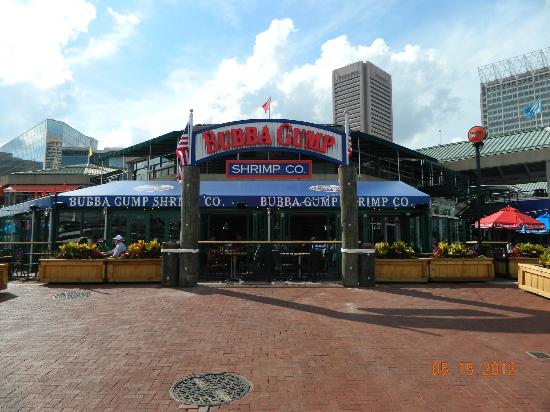
This photo of Bubba Gump Shrimp Co. is courtesy of TripAdvisor

These conditions lead Bubba Gump to sue the landlord for breach of contract, alleging that its lease required the landlord to maintain common areas. Bubba Gump alleged that rat infestation and dirty common areas evidenced a breach of the contractual promises. Bubba Gump estimated that over 20% of its greater than $1 MM yearly rent was attributable to the common area maintenance that was not being performed by the landlord.

As is typical in cases for breach of contract, Bubba Gump's lawyers added additional alternative claims for  unjust enrichment and other claims for equitable relief. It was the appellate court's discussion of this group of equitable claims which gives us a snapshot of Maryland's current law on commercial disputes.

The case reminds lawyers that equitable remedies, like unjust enrichment, are not available where the parties have a contract in place for the same  subject in dispute, and that contract fully covers the dispute. There are exceptions where a fraud has been committed at the inception of the contract (and not its performance), or the existing contract does not fully cover the subject matter of the dispute. This appellate court saves all Maryland lawyers time in the library by reminding that "[n]o reported decision applying Maryland law has ever upheld a judgment based on any of these exceptions."

For this reason, the trial court's decision granting Bubba Gump an equitable discount on rent owed under the leasing contract was reversed. Bubba Gump was entitled to recover contract damages, but the appellate court instructed that the contract also operated to limit the categories and amounts of damages a commercial tenant may collect.

In the end, broken glass, dirty restrooms and rat infestation at Harbor Place netted Bubba Gump recovery of its out-of-pocket expenses and some attorney fees, but no lost profits or return of rent.


Wednesday, August 14, 2019

A duty of candor applies in tax sale cases foreclosing rights of redemption.

Our real estate litigation practice touches some of the saddest moments of client life, such as where a family home is lost to tax sale. When real estate taxes and other municipal charges are unpaid, the municipality will auction the property to the highest bidder.  The winning bidder must pay the tax due to the municipality. The winning bidder is then given the privilege to later file a new lawsuit to permanently take the real property from the defaulted taxpayer/owner.

The lawsuit to take ownership of the property asks a judge to extinguish the title owner's "right of redemption."  This is a right to refund to the successful auction bidder the taxes paid to the municipality, plus various fees, interest and expense allowed by statute. The defaulted taxpayer/owner can make this payment, or "redemption," right up to the moment a judge's gavel falls in the lawsuit.

If that redemption is made, all is well and the taxpayer/owner is fully restored to her property.

Where the redemption is not made, usually because of the very hardships that prevented payment of the original tax bill, the court will issue a final order "extinguishing rights of redemption," and granting fee simple title to the successful bidder. This is where today's story begins.

Much of the tax sale and foreclosure process runs on the good faith and professionalism of the lawyers prosecuting the cases--- Our judges rely on truthful representations about service, the status of non-payment, and the material facts of each case. Our rules of professional conduct call this a "duty of candor."  It often requires a lawyer to disclose facts, circumstances and  controlling law that might impair or even defeat the relief she seeks from the court.

The duty of candor greases the gears that run our courts. If counsel is not deemed truthful, she will not obtain desired results. Worse, if counsel is not candid and wrongly obtains a result, then the integrity of our court system is damaged. Further to that point, in a society built on a foundation of property rights, any perversion of the court system by which ownership is involuntarily stripped from one person and awarded to another damages our Nation.

Where a lawyer and her client seeks to foreclose rights of redemption, the order issued by the court contains several requirements, all of which must be met before the lawyer's client may evict the current occupants of the foreclosed property:

  1. Pay the full bid purchase price to the municipality (this is the amount bid above the amount of the delinquent tax);
  2. Receive a deed from the municipality naming the new title owner;
  3. Request and receive writ of possession (a court instruction to the Sheriff directing that the new owner be put in actual possession of the real property;
  4. Execution of the writ by the Sheriff (after notice of a date certain, the occupants and their possessions are put out).
The redemption statute in Maryland is written so that the auction bidder has 90 days to pay the full bid price and receive a deed. If this is not done to completion, interested parties may move for a court order vacating the order foreclosing rights of redemption. This may or may not occur, as most folks subject to tax sale foreclosure are caught up in the basic need to secure safe and clean housing.

It is at this point of the proceedings that an attorney's duty of candor is most required for the just operation of our court. The statutes do not expressly say that payment must be made to the municipality before a writ of possession is requested. However, it is logical and just to anyone with a real property background that payment must be made before title can be received, and that title must be received before one has rights to actually possess property, and that one must have legal possession before relying on judicial process to evict the former owner and occupants.

This is not always the case, though, in our local court systems. Some high-volume tax sale foreclosure businessmen and their entities seek writs of possession (item #3 on the list, above) before making full payment in exchange for a deed showing their ownership. This creates the injustice of dispossessing the prior owner while depriving them of the money representing equity in the property. In short, they have lost the property, and they are simultaneously deprived of the money paid for the property.

A recent case handled by this Firm illustrates the issue, and how the court handles such lack of candor when it is revealed.

Our client, an elderly individual with dementia, lost his home to tax sale. His legal guardian could not redeem the property, and so the court issued the order extinguishing rights of redemption and directing the four items, listed above, for the transfer of ownership to the successful auction bidder.

The successful bidder, through its lawyer, made immediate request for a writ of possession, before making full payment and before receiving a title deed. The request filed with the court and upon which the judge relied did not candidly disclose that payment had not yet been made. The court issued the writ, and the Sheriff arrived to put the elderly individual out of the house, with the assistance of his care-giver and guardian.

It was only after this Firm filed a request to set aside the order for the lawyers lack of candor that the successful bidder made payment. But this payment was two months after the elderly individual was put out, and after the successful bidder spent over 50,000 renovating the property in preparation for a flip.

The judge hearing the motion found that the successful bidder had, indeed, jumped the gun to request a writ of possession before having paid for the property. This fell under a rule applicable to all lawyers and litigants, in all cases, barring claims made "without substantial justification." In this instance, like many others that go unnoticed, the successful bidder sought to use the equity in the property as a no-interest loan from the former owner to prepare the property for sale. Without court intervention, the property would have been flipped and those proceeds of sale used to fund payment to the municipality of the bid price.  The municipality would have been asked to issue the deed directly to the new third-party owner, or two deeds would have been executed simultaneously.

And throughout that process, our elderly client would have been deprived of both a home and his money. The judge was as appalled as you likely are while reading this story.  It was for the lack of candor that damages were awarded to our elderly client that included emergency hotel costs and our attorney's fees.

The duty of candor applies to all cases, in all courts. A lack of candor by your opponent, if proven, may well permit you to vacate a prior judgment or to obtain money damages, even where  all appears lost.

Thursday, October 5, 2017

New Maryland foreclosure rules for abandoned or vacant properties.

Lenders may now foreclose faster on abandoned or vacant  Maryland residential properties. 

Senate Bill 1033 went into effect on October 1, 2017. It provides a short-cut to the existing foreclosure rules that prevent a lender from initiating foreclosure until 90 days have elapsed from the triggering event.

There must still be a triggering event, such as an extended failure to pay. But if the property is vacant or abandoned the lender may file a petition in the circuit court for permission to immediately foreclose without notice. The court is required to rule on the petition "promptly."

The petition must include admissible evidence to demonstrate that the property is vacant or abandoned. How is that to be done?  The lender must demonstrate any three of the following eleven factors (the capitalized language is lifted from the new law):

(1) GAS, ELECTRIC, SEWER, OR WATER UTILITY SERVICES TO THE PROPERTY HAVE BEEN DISCONNECTED;
(2) WINDOWS OR ENTRANCES TO THE STRUCTURE ON THE PROPERTY ARE BOARDED UP OR CLOSED OFF, OR MULTIPLE WINDOW PANES ARE BROKEN AND UNREPAIRED;
(3) DOORS TO THE STRUCTURE ON THE PROPERTY ARE SMASHED THROUGH, BROKEN OFF, UNHINGED, OR CONTINUOUSLY UNLOCKED;
(4) JUNK, LITTER, TRASH, DEBRIS, OR HAZARDOUS, NOXIOUS, OR UNHEALTHY SUBSTANCES OR MATERIALS HAVE ACCUMULATED ON THE PROPERTY;
(5) FURNISHINGS, WINDOW TREATMENTS, OR PERSONAL ITEMS ARE ABSENT FROM THE STRUCTURE ON THE PROPERTY;
(6) THE PROPERTY IS THE OBJECT OF VANDALISM, LOITERING, OR CRIMINAL CONDUCT, OR THERE HAS BEEN PHYSICAL DESTRUCTION OR DETERIORATION OF THE PROPERTY;
(7) A MORTGAGOR OR GRANTOR HAS MADE A WRITTEN STATEMENT EXPRESSING THE INTENTION OF ALL MORTGAGORS OR GRANTORS TO ABANDON THE PROPERTY;
(8) THERE IS A DETERMINATION THAT NO OWNER OR TENANT APPEARS TO BE RESIDING ON THE PROPERTY AT THE TIME OF AN INSPECTION OF THE PROPERTY BY:
     (I) THE THE SECURED PARTY; OR
     (II) AN APPROPRIATE OFFICIAL OF THE COUNTY OR MUNICIPAL CORPORATION IN WHICH THE PROPERTY IS LOCATED;
 (9) TWO OR MORE CITATIONS HAVE BEEN ISSUED BY A COUNTY OR MUNICIPAL CORPORATION AGAINST THE PROPERTY FOR FAILURE TO MAINTAIN THE PROPERTY AND A HEALTH AND SAFETY ISSUE EXISTS THAT HAS NOT BEEN RECTIFIED;
(10) THE PROPERTY HAS BEEN CONDEMNED BY A COUNTY OR MUNICIPAL CORPORATION; OR
(11) OTHER REASONABLE INDICIA OF ABANDONMENT EXIST.
As you can see, there is a lot to pick from, and each alleged "fact" is an opportunity for dispute at the court's "prompt" hearing. The borrower has an opportunity under the new rule to deny the alleged facts supporting the petition. What is not clear is whether a borrower can be given the opportunity to cure the conditions on which the petition is based (in addition to bringing the loan current), and thus render the petition moot or premature.

But shortening the process for foreclosure on vacants may not be enough to entice lenders to execute on recorded liens. Lenders may continue the practice of electing a breach of contract action against the borrower in order to obtain a money judgment. It is the business practice of some lenders to seek court judgment against the borrower on the underlying promissory note, while leaving the recorded lien intact as a cloud on title. This practice makes it even less likely that a vacant or abandoned property will be recycled to productive use. The new rule does nothing to remove this choice from the lender--- a bank cannot be forced to foreclose, even if the borrower is delinquent, and especially if the property is abandoned or vacant.

Do you need to file or defend such a petition? Fill out our contact form on this page and let's discuss your case.


Sunday, April 19, 2015

Keep a sharp lookout for the Super Yachts on our Chesapeake Bay!

Watching big ships move up and down the Bay is a fun pastime for those of us who spend our time on the Bay fishing or sun bathing. Each large vessel you see is required, by law, to hire a licensed Chesapeake Bay Pilot. The cost of a Bay Pilot can be up to $268/hour, with a two hour minimum. But the cost is well worth the benefit of avoiding an accident. The largest commercial ships can draw 47 feet in a 50 foot channel. Without the assistance of a licensed Chesapeake Bay Pilot the largest vessels might ground, or dump materials that would harm the delicate balance of aquatic life in the Bay.

But the law required large pleasure boats to engage a Bay Pilot, too. Any movement within the navigable waters of the Bay required a Bay Pilot, including a shift from a berth to a fueling pier. And as you might imagine, this cost has kept many large pleasure boats away from the Chesapeake region. “These vessels spend tens of thousands of dollars alone on one fuel bill, plus money on provisioning, local entertainment, tourism and repairs,” said Jessie Bowling of Baltimore Marine Centers, which operates five marinas in the harbor, according to an April 16, 2015 article in the Baltimore Sun. Many speculated that the old law was an economic anchor to be cut away.


State Delegate Peter Hammen, of Baltimore’s 46th District, which covers the entire waterfront for the Port of Baltimore, recently introduced an emergency bill to exempt large pleasure boats from the Bay Pilot requirement. Governor Hogan signed the measure into law on Wednesday, April 15, 2015.

This means that certain large pleasure boats are no longer required to hire a Bay Pilot. Specifically, this exemption covers:

1.       Recreational vessels less than 200 feet long, and those with less than a 12 foot draft.
2.       If they possess a valid federally issued cruising license; and
3.       If they are not engaged in commercial service; and
4.       If they are not carrying passengers for hire.

A “recreational vessel” is defined by federal law and means a vessel being manufactured or operated primarily for pleasure or leased, rented, or chartered to another for the latter’s pleasure. “Commercial service” includes any type of trade or business involving the transportation of goods or individuals, except for service performed by a combatant vessel. “Passenger for hire” means a passenger for whom money is collected and paid to any person having an interest in the vessel. Federal cruising licenses exempt pleasure boats of certain countries from having to undergo formal entry and clearance procedures such as filing manifests and obtaining permits to proceed as well as from the payment of tonnage tax and entry and clearance fees at all but the first port of entry. These licenses can be obtained from the U.S. Customs and Border Protection Port Director at the first port of arrival in the United States. Cruising licenses are normally valid for up to a year.

Now, for those of use spending our time on boats well under the 200 foot limits of this exemption, what does all this mean?  Hopefully, it means more traffic on the Bay.  By lessening the cost to travel up the Chesapeake to Baltimore and Annapolis, the exemption may well generate additional gross revenues for those businesses servicing large vessels and their guests.


It also means we must be much more aware of our surroundings while out on the open water of the Bay. If the new law has its intended effect, we will be joined by larger vessels moving without the assistance of trained Bay Pilots. These larger vessels will be in close proximity as we move in and around the Bay’s larger harbors and shipping channels. We all remain responsible for our own safety, so keep a sharp lookout, and wave to our new visitors!

Friday, January 16, 2015

Visit our improved website!

Our website is upgraded and loaded with useful information about our practice, and how we can help solve your problems! Visit anytime.


Wednesday, November 19, 2014

The War on your Constitution.


The Baltimore Sun reports that prosecutors are choosing to remove evidence from criminal trials rather than permit cops from disclosing how they track cell phones:

City police Det. John L. Haley, a member of a specialized phone tracking unit, said officers did not use the controversial device known as a stingray. But when pressed on how phones are tracked, he cited what he called a "nondisclosure agreement" with the FBI.

"You don't have a nondisclosure agreement with the court," Baltimore Circuit Judge Barry G. Williams replied. Williams threatened to hold Haley in contempt if he did not respond. Prosecutors decided to withdraw the evidence instead.
What is a "stingray?"  The ACLU provides this definition:
Stingrays, also known as "cell site simulators" or "IMSI catchers," are invasive cell phone surveillance devices that mimic cell phone towers and send out signals to trick cell phones in the area into transmitting their locations and identifying information. When used to track a suspect's cell phone, they also gather information about the phones of countless bystanders who happen to be nearby.

Traveling?  Take a look this interactive map showing those states where law enforcement is using the stingray, and know that your phone data is very much at risk of interception without your knowledge.

The device is expensive- Baltimore City spent $133,000 to purchase one in 2009- so you better believe it is used. But subterfuge about how they may be undermining the civil rights of non-suspects remains a matter of concern in court. Prosecutors would rather dump evidence than permit officers to respond truthfully to questions:
In court Monday, the robbery detective who prepared the warrant to search Taylor's home testified that members of the department's Advanced Technical Team did a "ride-by" — described in court papers as "sophisticated technical equipment" — to determine one of the phones was inside the home. Detective Alan Savage said he did not know what technology or techniques the unit employs.
The defense then called Haley to the stand. He said police can use data from the cellphone companies to locate phones in real time.
Insley asked Haley whether police can ascertain a phone's location "independently," without the help of a phone company. Haley said yes.
When asked how, he balked.
"I wouldn't be able to get into that," Haley said.
Insley tried again later. Haley responded that police can get GPS location data from phone companies.
"Then there's equipment we would use that I'm not going to discuss that would aid us in that investigation," Haley said.
Williams, the judge, instructed Haley to answer the question. Haley invoked the nondisclosure agreement.
"I can't. I'm sorry. I can't," Haley said.
Williams called Insley's question "appropriate," and threatened to hold Haley in contempt if he did not answer.
Haley demurred again, and Assistant State's Attorney Patrick R. Seidel conferred with other prosecutors in court to observe the hearing.
Finally, Seidel said prosecutors would drop all evidence found during the search of the home — including, authorities have said, a .45-caliber handgun and the cellphone. The prosecutor said the state would continue to pursue the charges.
 Who else uses this secret technology? The ACLU has collected various items that identify the federal agencies for us. They include the FBI, the DEA, the U.S. Secret Service, Immigration and Customs Enforcement, the U.S. Marshals Service, the Bureau of Alcohol Tobacco and Firearms, the U.S. Army, U.S. Navy, U.S. Marine Corps, U.S. National Guard, U.S. Special Operations Command,  and the NSA.

The more robust patriots among us proudly declare that this technology is needed to target terror suspects and other enemy combatants. But use continues to spread, right here at home:
Police and prosecutors in another case ran into a similar problem in September, when they were asked to reveal how a cellphone was tracked.
Sgt. Scott Danielczyk, another member of the Advanced Technical Team, testified in that home invasion case — also before Judge Williams — that police used data from a court order to track a cellphone to the general area of the 1400 block of E. Fayette St.
Danielczyk and three other members of the unit were tasked to "facilitate finding it," he testified, and determined the phone was in the possession of someone on a bus.
Williams asked how Danielczyk concluded the phone was being carried by the suspect.
"Um, we had information that he had the property on him," the officer said.
Williams pressed.
"This kind of goes into Homeland Security issues, your honor," Danielczyk said.
"If it goes into Homeland Security issues, then the phone doesn't come in," Williams said. "I mean, this is simple. You can't just stop someone and not give me a reason."
In that case, too, the phone evidence is no longer in play. Prosecutors are proceeding without it.
This is real life, and not Season 6 of The Wire. The use of phone wire tap technology in the HBO series was characterized by creator David Simon as  metaphor. Like police digging into the secret world of Baltimore's fictional drug culture, the viewer was invited to share in that secret view. In fact the show often presented images as if the viewer were looking through cameras or listening in on phone calls.


But what is unfolding in our City courts is not metaphor. The police  and prosecutors sworn to protect and uphold the Constitution of the United States are gathering information on you and me without obtaining Constitutionally mandated permission. And to hide this fact from public scrutiny, they choose to cripple their own prosecutions by withdrawing evidence.

Be afraid, be very afraid.

Postscript 12/11/2014- Our friend Tom Donnelly argued successfully before the Maryland Court of Appeals that expert testimony is required in connection with identifying cell phone tower locations and transmissions in criminal cases. Well done, Tom!

Friday, June 15, 2012

If you want to be a seaman, get in the boat!

This weekend is a big celebration of the 200th Anniversary of the War of 1812, here in Baltimore. It's a regular "Sailabration," with ships from all over, and lot's of self important people "speechifying" down and around Fort McHenry. All this fuss put me in a nautical mood, and I have always enjoyed maritime law more than any other area of my practice, so what better way to celebrate all those boats downtown than a few lines about some maritime law?

The Maryland Court of Special Appeals took a rare cruise into maritime law, launching the Dize v. Association of Maryland Pilots decision into the big pond of state court case law. Mr. Dize contracted silicosis of the lungs after his employer assigned him to sandblast the hull of a pilot boat owned by the Association of Maryland Pilots. To recover for his injuries from his employer, Mr. Dize sued in the Baltimore City Circuit Court (just a stone's throw from the Inner Harbor and the Chesapeake Bay). He lost on motion in the trial court, and he lost again, on appeal.

Now, it's not unusual for an injured worker to seek recompense from the boss. What is unusual in this case was Mr. Dize choosing to call him self a "Jones Act seaman," rather than a "longshorman," or just a regular 'ole "employee."  There's a difference, you see. He was seeking classification that has traditionally been granted our most imperiled maritime workers, a classification that would not have capped his recovery the way regular joes are limited by state or federal worker's compensation acts (you've heard the stories of scheduled injuries, and "what's a finger worth" after a dismemberment). The Jones Act seaman sues his employer for negligence, without the limitations of any scheduled recovery.  AND he gets to claim a daily stipend, called "maintenance and cure" even before he's won the case.  AND some contributory negligence on the part of the injured employee only reduces his recovery, it is not a complete bar, like it is in Maryland state law (at a recent Law Club meeting, I learned that Maryland is now in the minority of states where any amount of contributory negligence is a complete bar to recovery..that's another post for another day).

The federal "longshoreman," like the state worker, has limited recovery under the federal Longshore and Harborworker's Compensation Act. So, it's good to be a Jones Act seaman. I've litigated in all three areas, and Jones Act cases are, by far, the most fun (excluding the injured fellow, who usually would rather not be involved). I've learned so much cool stuff from crawling around vessels, including freighters, container ships, tugs, pilot boats, crab boats, and container cranes in Jones Act cases.


About 100 years ago, Congress created the Jones Act to protect the brave folks plying the high seas to bring us all those foreign goods we so deserve, called the Jones Act. This gave special protection to seafaring men and women injured in the service of our merchant fleet. After all, where would we be without our vanilla beans from Madagascar, or french wines, or bat guano from South America (really, look it up...Baltimore's port was built on this stuff!  In 1887, one island near the Dominican Republic shipped 462,000 tons of the stuff scraped out of 22 caves! And if you don't believe me, look at these 1899 log books, showing large tonnages of the stuff dropping on Baltimore's docks.) These guys deserve special protection.  After all, here's just a partial list of the bad stuff that can happen,compiled by another maritime lawyer:
    • Loss of footing. Surfaces on any vessel may become slick due to exposure to ocean spray, rain, humidity or wet lines hauled aboard. When the ship is not properly equipped with non-slip surfacing that is maintained, these areas present a fall hazard that can and often do result in serious injury.
    • Nets, lines and rigging. Rope, when not properly handled, is extremely dangerous. Feet and limbs can become entangled causing a fall or worse.
    • Shifting cargo. When cargo is not properly secured, the movement of the ship can cause it to shift, creating the potential for a seaman to be struck or crushed.
    • Lack of adequate railing. All stairwells and even some walkways require railing in order to allow workers to safely navigate them in high seas.
    • Fall from height. Most vessels and offshore platforms have multiple stories. Improper railing, inadequate flooring or lack of safety measures such as improperly secured harnesses can result in a nasty fall.
    • Fires and explosions. Ships and offshore drilling platforms require some heavy machinery to function; when sparks ignite, especially when combined with the occasional gas leak, workers can be burned by flame.
    • Chemical burns. Contact with harsh chemicals due to improper training, incorrect storage or spills can cause serious and painful burns.
    • Overexertion. Everyone has an idea of the limits of his or her own strength. Seamen are regularly asked to perform tasks that push those limits. When tasks go beyond the limits of physical endurance or strength, muscular and skeletal injuries can occur that may permanently damage a seaman’s ability to make a living.
    • Decompression illness (DCI). Commercial divers execute extremely technical dives at extreme depths. These dives must be planned and executed exactly in order to avoid DCI (or “the bends”). When equipment fails or planning goes awry, divers are put in serious danger.
    • Struck by a falling object. Cranes move large loads around barges, vessels and platforms. When cranes collapse or loads are improperly secured, workers on the deck below are in serious danger of being struck by the falling cargo.
    • Malfunctioning equipment. Be it large machinery such as engines, cranes or drills, or hand held power tools such as saws or blowtorches, every maritime company has an obligation to ensure equipment stays in good working condition and that all workers are trained on its proper use. When machinery malfunctions, injuries ranging from cuts or burns to amputations may result.
    • Improper supervision of loading and unloading. Longshoremen do much of the roll on/roll off operations, but seamen may assist in the process. High vehicular traffic and the coordination of the movement of large loads and containers create a number of dangers including being struck by a vehicle or load. These operations must be well supervised and coordinated in order to protect workers who are focused on a specific task.
    • Electrocution. Exposed wiring, improper insulation and wet surfaces can lead to electrocution ranging from mild to severe.
    • Radiation. Sealed and unsealed radioactive substances have a myriad of uses such as in cementing operations and density gauges. Exposure to an excessive amount of radiation can lead to radiation sickness, a serious condition requiring medical attention.
    • Scaffolding collapse. When incorrectly constructed, scaffolding may collapse, causing injury to those upon and around the scaffold. Either a fall from great height or being struck by falling objects can lead to injury or death.
    • Release of hydrocarbons. Hydrocarbon release can happen in liquid or gas form, both of which create explosion and fire hazards due to their flammable nature. Hydrocarbon inhalation can also cause pulmonary and neurological injury.
    • Vessel collision. The seas are a busy place and vessels will on occasion collide. This presents a danger to seamen whether through the force of the impact or resultant complications such as fires or chemical spills.
    • Getting caught in equipment. Winches are a good example of this potential hazard, as the winch drum can potentially snag body parts that get too close. Tasks that involve dangerous interaction with equipment or a lack of safety training, protocol and tools can lead to serious injury such as broken bones, soft tissue injuries or amputation.
    • Improperly inspected enclosed spaces. Oxygen deficiency or flammable or toxic atmosphere can all occur in enclosed spaces aboard vessels. Before working in these areas, they must be inspected to ensure that the workers are not in danger.
    • Falling overboard. A fall overboard can cause serious injury or death. The impact of the water is sometimes enough to render a person unconscious, leading to drowning. Non-fatal complications could arise from the fall including concussion, broken bones, spinal injury and hypothermia, not to mention the accompanying mental anguish.

This partial list should make it obvious why Congress gave these folks the right to sue their employer in negligence, if they could demonstrate their "seaman" status.  It is dangerous work.

But Admiralty and Maritime lawyers know all that, it's old hat. It's the fact that this decision boiled up out of the depths of Baltimore's Circuit Court that makes it interesting to me. You see, maritime cases are mostly filed in the United States District Courts. Jurisdiction over most anything dealing with international trade and commerce has drifted to the federal courts....except for the really cool "savings to suitor's" clause in the United States Constitution that guarantees certain claims for injury can still be brought in state court, at the sole election of the injured employee. It's rather empowering for the little guy. And where every other state court case that has related federal claims can be "removed" to federal court, the Jones Act case cannot. Chalk one up for the injured guy's forum selection.

And to make Mr. Dize's case even cooler, the Maryland Court of Special Appeals took some time to analyze U.S.Supreme Court law about what constitutes a "seaman." In a court that is normally swamped with criminal appeals of right from the entire state's trial court system, the law clerks must have been fighting over this one.

So what's the case hold?  Does it matter? Well, if you're injured while working on, or in support of a vessel, it sure does.  Maryland clearly adopted the Supreme Court's 30% rule, as described in Chandris v. Latsis.  That means roughly 1/3 of your time must be spent working on the boat if you want to earn Jones Act seaman status. The Supremes marked this off as a "rule of thumb," but anyone claiming status who spends less than 30% of his work time on the boat has to show a darn good reason to depart from this percentage.  One example that might work (it didn't for Mr. Dize) is the desk employee newly transfered to a vessel who is injured almost immediately in his new duties. He would not be able to demonstrate his Jones Act status using the 30% rule, but the nature of his recent assignment might save him from strict application of the rule.

And now I really want that Grady White I've been day dreaming about!  See you on the Bay!