A transcript presents as a bound volume of pages, each consisting of 21 double-spaced lines of text. And here is the most important thing-- the spaces between lines of text are uniform. More specifically, the spaces between each line of text do not expand or contract depending on how quickly the deponent responds, or how long the deponent pauses to consider a response.
Showing posts with label deposition. Show all posts
Showing posts with label deposition. Show all posts
Saturday, January 20, 2024
Silence is your true friend, it will never betray you, especially in a deposition.
You will be deposed. Whether you are plaintiff, defendant, or witness, another participant in the lawsuit will demand that you be questioned, under oath, before a court reporter. Your answers will be typed and presented as a transcript.


Sunday, January 31, 2021
Thursday, June 18, 2020
Maryland's Court of Appeals adopts tech changes to make justice more accessible.
This week, Maryland's highest court, which makes the rules dictating how litigation is conducted in all of our courts, adopted rules making access to justice a bit easier.
Spurred by the inconvenience visited by COVID-19, where mandatory closures prevent many court room activities, the Court approved the following;
Spurred by the inconvenience visited by COVID-19, where mandatory closures prevent many court room activities, the Court approved the following;
- Video conferencing in the District Courts- A visit to the District Court is often akin to a visit to the MVA. The waits are long, the rooms crowded, and you are often told to return, again, on a later day. Soon, many conferences and hearings will be held by video participation. What remains to be worked out is whether persons without internet or a computer may still participate in person, or whether this innovation has created another practical impediment to court access for some.
- Electronic filing for appeals- Three of Maryland's largest jurisdictions are Baltimore City, Prince George's and Montgomery Counties. They are not yet set up for electronic filing. Appeals to the courts in Annapolis are thus not done electronically. That has been changed. While filings in the Circuit Courts must still be mailed or hand-delivered, appellate filings to the courts in Annapolis will be via the on-line portal. This is a modest improvement, but a step toward uniform efficiency.
- Remote video depositions- The current rules of procedure do not contemplate remote participation via video. Taping is routine, but it still requires gathering in one location. The conduct of remote discovery can add efficiencies to litigation, while also adding complexities that drive up costs for litigants. It also creates opportunity for shenanigans, where remote deponents may be secretly coached or manipulated by off-camera persons or devices.
We will help you manage these innovations, and move your cases to the swiftest conclusion our system will allow. Changes must be made, and they will breed additional modifications in how we conduct your cases. We will adapt and grow with them. As the CEO of Uber reminds us, "ultimately, progress and innovation win."
Tuesday, February 10, 2015
Tell him where to stick that subpoena!
The power of the subpoena is an enormous part of a lawyer's ability to pull together facts, document and witnesses. The subpoena is equally available to unrepresented parties, but in the hands of a lawyer steeped in knowledge of the rules and national compacts for compelling testimony across state lines the subpoena is a formidable weapon.
As Wilford Brimley's character from "Absence of Malice," an assistant united states attorney, said:
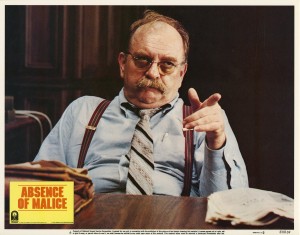
On February 2, 2015 Maryland's highest court disbarred a lawyer who was found to have repeatedly abused his position as an officer of the court by improperly serving subpoenas and deposition notices across state lines, among other things, and filing frivolous motions in courts accusing his targets of not complying with those subpoenas.
In summary, the Court found that over a period of several years, in dozens of separate cases, this lawyer had ignored well known rules about issuing subpoenas to witnesses. The Court also found that he often filed motions in court to compel actions by witnesses, and for sanctions upon their failures to act, that were not factually true.
He was a steamroller and a bully. He took shortcuts, and he absolutely did not respect the rights of the witnesses.
As a witness in my case, for trial or deposition, you deserve my respect. Because without you, the witness, I cannot do my job. Without the witness to testify about "who, what, when, where and how," I have little or nothing to present to the court or the jury.
You, the witness, are the foundation of our adversarial system. An English commentator describes the role of the witness this way:
And if the witness is requested to bring documents to deposition, he or she must be given at least thirty (30) days to respond. Again, its only fair to treat witnesses as well as a party to the case.
But, “the subpoena powers of the State of Maryland stop at the state line.” A Maryland lawyer cannot expect to mail a subpoena from Maryland to a witness in another state and expect obedience to that subpoena. But it happens often.
There is an Interstate Deposition and Discovery Act adopted in most States. Maryland has adopted its version of the Act, which describes how the subpoena of one state can be enforced in another state. It requires work, but when lawyers are reaching out to non-parties to draft them into the case, shouldn't it require a bit of work to assure it's done properly and with as little inconvenience to the witness as possible?
That's a rhetorical question-- please don't answer--the only proper response is "yes."
Did you receive a summons or subpoena? You have rights. Mostly you have the right to be treated fairly. And you can file a motion in court to make sure the lawyer who issued you that summons or subpoena will treat you fairly.
As Wilford Brimley's character from "Absence of Malice," an assistant united states attorney, said:
Tell you what we're gonna do. We're gonna sit right here and talk about. Now if you get tired of talking here, Mr. Marshal Elving Patrick there will hand you one of them there subpoenas he's got stuck down in his pocket and we'll go downstairs and talk in front of the grand jury...
On February 2, 2015 Maryland's highest court disbarred a lawyer who was found to have repeatedly abused his position as an officer of the court by improperly serving subpoenas and deposition notices across state lines, among other things, and filing frivolous motions in courts accusing his targets of not complying with those subpoenas.
In summary, the Court found that over a period of several years, in dozens of separate cases, this lawyer had ignored well known rules about issuing subpoenas to witnesses. The Court also found that he often filed motions in court to compel actions by witnesses, and for sanctions upon their failures to act, that were not factually true.
He was a steamroller and a bully. He took shortcuts, and he absolutely did not respect the rights of the witnesses.
As a witness in my case, for trial or deposition, you deserve my respect. Because without you, the witness, I cannot do my job. Without the witness to testify about "who, what, when, where and how," I have little or nothing to present to the court or the jury.
You, the witness, are the foundation of our adversarial system. An English commentator describes the role of the witness this way:
Witness is an important constituent of the administration of justice. By giving evidence linking to the charge of the offence the witness performs a sacred duty of assisting the court to discover the truth. This is the reason why before giving evidence he/she either takes an oath in the name of God or makes a solemn affirmation that he/she will speak the truth, the whole truth and nothing but the truth. The witness has no risk in the decision of the criminal court as he is neither the accused nor the victim. The witness performs an important public duty of assisting the court in deciding on the guilt or otherwise of the accused in the case. He sacrifices his time and takes the trouble to travel all the way to the court to give evidence. The witness performs an important public duty of assisting the court in deciding on the guilt or otherwise of the accused in the case. He sacrifices his time and takes the trouble to travel all the way to the court to give evidence. The witness should therefore be treated with great respect and consideration as a guest of honour. Unfortunately, all these are seen not to be happening in the courts.There are local rules that dictate how witnesses must be noticed and scheduled when they live in Maryland. For example, a witness living in Garrett County cannot be compelled to travel to Kent County on the Eastern Shore to give testimony- it's just not fair to the witness, for many reasons. It is a very common question asked of our lawyers, and we are always surprised that so many other lawyers just get it wrong. And when they do get it wrong, it is the witness-the very person providing the evidence essential to our job- who suffers the inconvenience and cost.
And if the witness is requested to bring documents to deposition, he or she must be given at least thirty (30) days to respond. Again, its only fair to treat witnesses as well as a party to the case.
But, “the subpoena powers of the State of Maryland stop at the state line.” A Maryland lawyer cannot expect to mail a subpoena from Maryland to a witness in another state and expect obedience to that subpoena. But it happens often.
There is an Interstate Deposition and Discovery Act adopted in most States. Maryland has adopted its version of the Act, which describes how the subpoena of one state can be enforced in another state. It requires work, but when lawyers are reaching out to non-parties to draft them into the case, shouldn't it require a bit of work to assure it's done properly and with as little inconvenience to the witness as possible?
That's a rhetorical question-- please don't answer--the only proper response is "yes."
Did you receive a summons or subpoena? You have rights. Mostly you have the right to be treated fairly. And you can file a motion in court to make sure the lawyer who issued you that summons or subpoena will treat you fairly.
We, the people, need you, the witness.
Sunday, October 3, 2010
Can you face your own Facebook?
A New York state court has ordered that a plaintiff give over to the defendant specific authorization to access her Facebook and Myspace accounts. The court has ordered that she disclose both current content, archived content, and deleted content.
The defendant's motion requesting the disclosure was based on deposition testimony that was at odds with the public portions of the plaintiff's Facebook page. She alleged injuries that limited her to staying indoors. But her publicly posted pictures showed her smiling and out-and-about, and not in her home. Imagine that!
I love this decision, as a parent and a lawyer! I've been telling kids I know and coach, for years, that nothing is private, and every disclosure creates impressions and attitudes. At the office, my law clerks and paralegals search all social media for background on every lawyer and witness we deal with in a case. We've caught more than one witness sleeping at the wheel!
Subscribe to:
Posts (Atom)