Showing posts with label constitutional rights. Show all posts

Wednesday, November 19, 2014

The War on your Constitution.


The Baltimore Sun reports that prosecutors are choosing to remove evidence from criminal trials rather than permit cops from disclosing how they track cell phones:

City police Det. John L. Haley, a member of a specialized phone tracking unit, said officers did not use the controversial device known as a stingray. But when pressed on how phones are tracked, he cited what he called a "nondisclosure agreement" with the FBI.

"You don't have a nondisclosure agreement with the court," Baltimore Circuit Judge Barry G. Williams replied. Williams threatened to hold Haley in contempt if he did not respond. Prosecutors decided to withdraw the evidence instead.
What is a "stingray?"  The ACLU provides this definition:
Stingrays, also known as "cell site simulators" or "IMSI catchers," are invasive cell phone surveillance devices that mimic cell phone towers and send out signals to trick cell phones in the area into transmitting their locations and identifying information. When used to track a suspect's cell phone, they also gather information about the phones of countless bystanders who happen to be nearby.
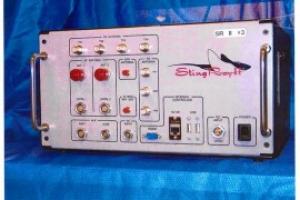
Traveling?  Take a look this interactive map showing those states where law enforcement is using the stingray, and know that your phone data is very much at risk of interception without your knowledge.

The device is expensive- Baltimore City spent $133,000 to purchase one in 2009- so you better believe it is used. But subterfuge about how they may be undermining the civil rights of non-suspects remains a matter of concern in court. Prosecutors would rather dump evidence than permit officers to respond truthfully to questions:
In court Monday, the robbery detective who prepared the warrant to search Taylor's home testified that members of the department's Advanced Technical Team did a "ride-by" — described in court papers as "sophisticated technical equipment" — to determine one of the phones was inside the home. Detective Alan Savage said he did not know what technology or techniques the unit employs.
The defense then called Haley to the stand. He said police can use data from the cellphone companies to locate phones in real time.
Insley asked Haley whether police can ascertain a phone's location "independently," without the help of a phone company. Haley said yes.
When asked how, he balked.
"I wouldn't be able to get into that," Haley said.
Insley tried again later. Haley responded that police can get GPS location data from phone companies.
"Then there's equipment we would use that I'm not going to discuss that would aid us in that investigation," Haley said.
Williams, the judge, instructed Haley to answer the question. Haley invoked the nondisclosure agreement.
"I can't. I'm sorry. I can't," Haley said.
Williams called Insley's question "appropriate," and threatened to hold Haley in contempt if he did not answer.
Haley demurred again, and Assistant State's Attorney Patrick R. Seidel conferred with other prosecutors in court to observe the hearing.
Finally, Seidel said prosecutors would drop all evidence found during the search of the home — including, authorities have said, a .45-caliber handgun and the cellphone. The prosecutor said the state would continue to pursue the charges.
 Who else uses this secret technology? The ACLU has collected various items that identify the federal agencies for us. They include the FBI, the DEA, the U.S. Secret Service, Immigration and Customs Enforcement, the U.S. Marshals Service, the Bureau of Alcohol Tobacco and Firearms, the U.S. Army, U.S. Navy, U.S. Marine Corps, U.S. National Guard, U.S. Special Operations Command,  and the NSA.

The more robust patriots among us proudly declare that this technology is needed to target terror suspects and other enemy combatants. But use continues to spread, right here at home:
Police and prosecutors in another case ran into a similar problem in September, when they were asked to reveal how a cellphone was tracked.
Sgt. Scott Danielczyk, another member of the Advanced Technical Team, testified in that home invasion case — also before Judge Williams — that police used data from a court order to track a cellphone to the general area of the 1400 block of E. Fayette St.
Danielczyk and three other members of the unit were tasked to "facilitate finding it," he testified, and determined the phone was in the possession of someone on a bus.
Williams asked how Danielczyk concluded the phone was being carried by the suspect.
"Um, we had information that he had the property on him," the officer said.
Williams pressed.
"This kind of goes into Homeland Security issues, your honor," Danielczyk said.
"If it goes into Homeland Security issues, then the phone doesn't come in," Williams said. "I mean, this is simple. You can't just stop someone and not give me a reason."
In that case, too, the phone evidence is no longer in play. Prosecutors are proceeding without it.
This is real life, and not Season 6 of The Wire. The use of phone wire tap technology in the HBO series was characterized by creator David Simon as  metaphor. Like police digging into the secret world of Baltimore's fictional drug culture, the viewer was invited to share in that secret view. In fact the show often presented images as if the viewer were looking through cameras or listening in on phone calls.


But what is unfolding in our City courts is not metaphor. The police  and prosecutors sworn to protect and uphold the Constitution of the United States are gathering information on you and me without obtaining Constitutionally mandated permission. And to hide this fact from public scrutiny, they choose to cripple their own prosecutions by withdrawing evidence.

Be afraid, be very afraid.

Postscript 12/11/2014- Our friend Tom Donnelly argued successfully before the Maryland Court of Appeals that expert testimony is required in connection with identifying cell phone tower locations and transmissions in criminal cases. Well done, Tom!

Thursday, June 6, 2013

Maryland v. King: Your DNA on trial.


In 1994, the State of Maryland established a DNA database to catalogue samples from convicted sex offenders.  Five years later, the list of persons required to contribute to the DNA database was expanded to include all those convicted of violent crimes.   Three years later, it was expanded to include all those convicted of felonies.  On January 1, 2009, Maryland once again expanded the reach of DNA collection to all persons arrested  (not convicted) for violent crimes.

Later in 2009, Alonzo King was arrested for assault.  Pursuant to Maryland’s DNA collection statute, the State extracted DNA from his mouth, and found it matched DNA taken from the victim of a 2003 rape.  Mr. King was subsequently indicted and convicted of rape, and sentenced to life without parole.  On appeal, Maryland’s highest court ruled that the practice of taking DNA from those who have not been convicted, but merely been arrested for certain crimes, violated the Fourth Amendment’s proscription of unreasonable searches and seizures.  The United States Supreme Court disagreed.

In a 5-4 decision, the Supreme Court found Maryland’s expanded DNA collection procedures constitutional, likening the extraction of DNA from an arrestee’s mouth to standard identification techniques like: finger-printing, comparing the arrestee to wanted posters, and looking at external tattoos of the arrestee.  The Supreme Court recognized that the intrusion associated with a swab of an arrestee’s mouth is necessarily greater than a visual inspection of their person, but reasoned that the intrusion was slight compared to the state interest served.

Let’s take a step back and consider how DNA samples are collected.  The inside of the mouth is rubbed with a cotton swab, also known as a buccal swab.  Cheek cells adhere to the swab, which is then marked with the party’s identification and sent to a laboratory for testing.  The timetable for results varies but can take up to two weeks. 

Results are then registered in DNA databases, making it possible for law enforcement laboratories to electronically search and compare collected DNA profiles to crime scene evidence.  The Combined DNA Index System (CODIS) links all local, state, and national databases and contains more than 5 million records.

All 50 states take cheek swabs from convicted criminals to check against federal and state databanks, with the court’s blessing.  The Supreme Court issue revolved around whether that DNA collection could come before conviction and without a judge issuing a warrant.  Currently, the federal government and 29 states, including Maryland, take DNA swabs upon arrest.  Of these states, 13 limit DNA collection to people arrested for a felony, while the others limit it to those accused of certain felonies.

The practical impact of the decision is that Maryland’s legislators have been vindicated by crafting a crime-fighting statute that has survived the highest level of federal constitutional scrutiny.  With every cold-case solved, politicians are re-writing their campaign speeches to emphasize their involvement with the passage of such a monumental law.

But where does it end?  Currently, anyone arrested for certain crimes, like assault, rape, arson, etc. are subject to mandatory DNA extraction.  As the brief history of Maryland’s DNA database has shown, the persons subject to such DNA extraction continues to grow.  It isn’t long before a legislator, seeking to appear “tough on crime,” proposes such extraction for an even broader cross-section of the community.

Soon, “you have the right to remain silent” may pale in ubiquity to “open wide and say ‘Ah’.”

Thursday, March 14, 2013

Handguns, self-defense, and Maryland's interpretation of the Second Amendment


            In 2008, Judge Antonin Scalia, speaking for a fractured Supreme Court, in District of Columbia v. Heller, 554 U.S. 570, galvanized the right to bear handguns (for “traditional lawful purposes”) among the class of civil liberties protected by the Constitution.  Yay!  The decision also recognized that the “inherent right of self-defense” is central to the Second Amendment.  Yay!


            You want to defend yourself, too.  And your desire to defend yourself does not decrease when you leave your home (in fact, depending on the neighborhoods through which you must travel, that desire may increase).  So keep a handgun in the glove compartment of your car, under the driver’s seat, or tucked in your waistband, right?  After all, the Constitution protects the “inherent right of self defense” and the right to bear handguns for that purpose, right?

            You’ll have to join the legions of Constitutional scholars currently serving time if you think so.

            Maryland, like many States of the Union, view the carrying of weapons in public with high dudgeon.  If you “wear, carry, or transport” a handgun on your person or in your vehicle, you are subject to a minimum penalty of 30 days in jail (if you have previously been convicted of weapons crimes, the minimum penalty increases to two years).  Md. Criminal Law Code Ann. §4-203.  There are exceptions for police and military folks—but if you’re reading this—you’re likely neither of those.

            If you’re going to carry a handgun outside your home, you must get a permit.  Md. Public Safety Code Ann. §5-303.  In March, 2012, a federal court judge found that Maryland’s law requiring applicants to show a “good and substantial reason” as a prerequisite to obtaining a permit violated the Second Amendment.  That decision was appealed to the Fourth Circuit, and arguments were heard in October 2012, but the requirement remains in place, pending the decision of the appellate court.

            Do yourself a favor.  Before you celebrate your civil liberties by toting a handgun outside your home, get yourself a permit.


Wednesday, November 28, 2012

Will your dumb smart phone give you up to the police?


The police want access to your cell phone! And courts across the country are unsure about whether you are protected. What, exactly, is on your cell phone that you hope will remain private from government intrusion? Most everything, I am sure.


The Fourth Amendment of the United States Constitution protects us from warrantless searches and seizures by the government.  A search can include reaching into your pocket, collecting a blood sample, or opening the trunk of your car.  What is unclear is whether looking through your phone is a “search.”  If it is a search, the police must first obtain a search warrant (which requires showing probable cause to a neutral judicial magistrate).  If not, the police may freely look through your phone. 
 
Whether something is a “search” depends on whether you had a “reasonable expectation of privacy” in the thing “searched.”  As an illustration, if you put something on the dashboard of your car, and park it in a public place, any person walking by can look through your windshield, and see the item.  You have no reasonable expectation of keeping that item “private.”  However, when you put something in your wallet, or in your nightstand, you can reasonably expect that item to remain out of the public view.  Thus, the police must have a search warrant to look in your wallet, but not through the windows of your car. 

When it comes to a cell phone, some courts consider it similar to a “container” which can be opened by the police during an arrest.  Other courts analogize a cell phone to a repository of private conversations, which would require the police to obtain a search warrant to inspect. 

Maryland's appellate courts have not ruled on the issue, but there is precedent suggesting that the contents of a cell phone require a search warrant for police to access.  See, Carpenter v. State, 196 Md.App. 212 (2010) (where police obtained a search warrant to retrieve pictures, text messages, and call logs from defendant’s cell phone).
 
And so, be mindful of your cell phone. It may be smart enough to remember all your esssential information, but too dumb to forget the incriminating stuff.