Showing posts with label chesapeake bay. Show all posts

Thursday, December 8, 2016

Bow-riding-- a reckless practice that is already illegal in Maryland.


Maryland's boating community saw several serious accidents in 2016 where boat propellers caused injury and death to passengers. It has spurred two ambitious State legislators to cobble together additional regulations to curb the practice of "bow-riding."
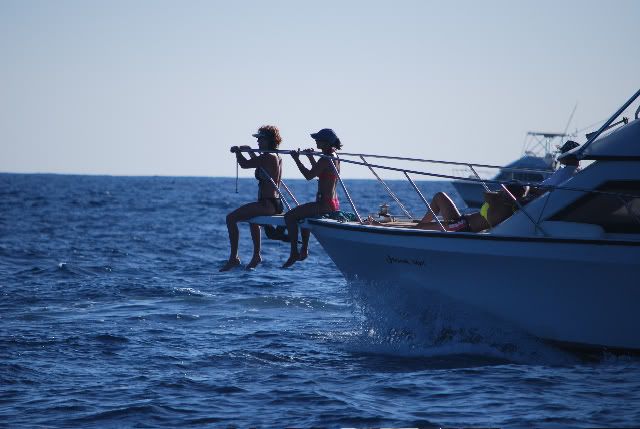


On July 30, 2016 a passenger doves off the bow of a ski boat and was cut by the boat's propeller. The accident was reported as follows:

...Eckenrode was with a party of seven people aboard a 24-foot Moomba power boat when he jumped from the bow of the boat into the water in the area of McHenry Cove without the knowledge of the other boat occupants. Informal instructions were reportedly being given to a new skier in the group at that time.
The boat, operated by Brian P. Morel, 36, of Sewickley, Pennsylvania, was placed in gear to navigate out of the area when the victim was struck by the boat's propeller. http://www.times-news.com/news/local_news/pennsylvania-man-seriously-injured-on-deep-creek-lake/article_c75dad60-6eb0-5c55-85cd-4ff4e9f0554b.html (last checked 12/8/2016).
Also on July 30, 2016, at the other side of the state, another propeller injury:
When officers arrived at the scene in Isle of Wight Bay at about 4 p.m., seven people were in the water around a rental pontoon boat that had run aground. One man was bleeding profusely from a gash on his arm created by the boat's propeller and another passenger was hanging onto a nearby moving boat.....the operator of the boat, was arrested after he failed field sobriety tests.  http://www.wrdetv.com/index.cfm?ref=60200&ref2=4898 (last checked 12/8/2016)


On August 17, 2016, a boy lost his  life, as reported:
Frederick was sitting on the edge of a pontoon boat in Sinepuxent Bay near Ocean City,  with his legs dangling over the side when he was hit by a propeller, according to the Natural Resources Police in Maryland.
 Natural Resources Police Spokeswoman Candy Thomson said after Frederick fell, the operator couldn’t stop and the propeller hit the boy. She added that it’s illegal in Maryland to dangle in front of a moving boat. http://nj1015.com/howell-boy-dies-in-maryland-boating-accident/ (last checked 12/8/2016)
A website that compiles statistics for pontoon propeller injuries across the country notes 198 serious injuries between 1964-2016. Maryland's cluster of accidents (not all pontoons) make up a minor percentage of reported incidents across the country over 52 years. Lawsuits arising from propeller related injury are similarly spread consistently across the years. Anecdotally, then, we can agree that propeller related injuries are a regular occurrence. And of that group, a much smaller subset arise from the practice of "bow-riding" where a passenger is allowed to ride the bow with limbs dangling, or to otherwise ride the gunwales while underway.


Two Maryland legislators have felt compelled to address the situation, announcing soon-to-be-published regulations to ban the practice of "bow-riding" while a boat is underway:

Last week, [Sen. James] Mathias and [Del. Mary Beth] Carozza, along with DNR and NRP officials, met with the state’s Boat Act Advisory Committee to discuss changes to the regulations that would prohibit bow-riding. Out of that meeting came a proposed regulation change that could put a new law on the books in advance of recreational boating season next spring.
Mathias said this week the meeting with the Boat Act Advisory Committee was productive and a new regulation prohibiting bow-riding could be posted in the Maryland Registry as soon as mid-January. Following the requisite public comment period, the new regulation could become effective as soon as March 27 [, 2017].  https://www.mdcoastdispatch.com/2016/12/08/proposed-reg-would-ban-bow-riding-in-state-waters-change-likely-to-take-effect-before-summer/ (last checked 12/8/2016).
The human reaction to tragedy is understandable--do something-- but there is already an adequate remedy in place. Actually, there are two statutes in place to address dangerous boating operation. One is federal, enforced by the USCG:

            46 U.S. Code Sec. 2302 

(a)A person operating a vessel in a negligent manner or interfering with the safe operation of a vessel, so as to endanger the life, limb, or property of a person is liable to the United States Government for a civil penalty of not more than $5,000 in the case of a recreational vessel, or $25,000 in the case of any other vessel.
(b)A person operating a vessel in a grossly negligent manner that endangers the life, limb, or property of a person commits a class A misdemeanor. 
(c) An individual who is under the influence of alcohol, or a dangerous drug in violation of a law of the United States when operating a vessel, as determined under standards prescribed by the Secretary by regulation—
(1) is liable to the United States Government for a civil penalty of not more than $5,000; or
(2) commits a class A misdemeanor.


Maryland has its own prohibition against negligent and reckless boating:


          Natural Resources Sec. 8-738.2:

In General 
(a) A person may not:(1) Operate a vessel recklessly or in a manner that may endanger another or the property of another on a bay, creek, lake, river, or stream in the State; or(2) Come into a wharf or bathing shore recklessly or in a manner that may endanger a person or property.

Fines and penalties
(b) A person who violates this section is guilty of a misdemeanor and on conviction is subject to: (1) For a first conviction, imprisonment not exceeding 30 days or a fine of not less than $25 and not exceeding $200 or both; and(2) For a second or subsequent conviction, imprisonment not exceeding 60 days or a fine not exceeding $500 or both.
The Maryland Department of Natural Resources even publishes a pamphlet reciting examples of negligent or reckless boating practices to be avoided. Not surprisingly, "bow-riding" is one express example of negligent or reckless boating in the pamphlet. It is not a stretch to say boat operators understand bow-riding to be a negligent and reckless practice.

Maryland does not need another regulation or statute to remind boaters to the keep arms and legs of their passengers in the boat while underway. The USCG and Maryland's DNR are both well equipped to enforce the laws already in place. It is a waste of resources, and causes confusion to selectively define and separately penalize subsets of behavior already covered by existing law.


Saturday, May 21, 2016

The Coast Guard Doesn't Need A Warrant.

May 21-27, 2016 is National Safe Boating Week. Coming one year after a record number of injuries and fatalities on the Chesapeake Bay, the United States Coast Guard has been actively boarding and inspecting small boats early in this boating season. Social media contains a steady stream of questions about Coast Guard authority to board and inspect small boats without probable cause or a warrant. The concept of probable cause and the Fourth Amendment to the United States Constitution are familiar to us from daily news reports about searches conducted of cars, homes and “suspects.” But every discussion thread includes some very bad information. The Coast Guard’s authority to search every nook and cranny of your boat is not the result of the misperceived government expansion in to our daily lives. The Coast Guard has simply never been restricted by the U.S. Constitution. It has operated as America’s most powerful police force for more than 200 years.
The Revolutionary war ended in 1783. The revolt had cost $400 Million in soldier’s wages, alone, and with no taxing authority the new country was deeply in debt to foreign nations. Six years later, in 1789, the first Congress imposed duties and tariffs on goods brought to the United States to retire the debt. However, the new nation had no means to enforce payment. The lack of domestic policing permitted smugglers to land goods easily along the American coast.
In 1790, the first Congress created the Revenue Cutter Service specifically to collect tariffs and duties on all imported goods. The authority of the RCS was broadly stated:
[I]t shall be lawful for all collectors, and the officers of the revenue cutters herein after mentioned, to go on board of ships or vessels in any part of the United States, or within four leagues [about 12 miles] of the coast thereof, if bound to the United States, whether in or out of their respective districts, for the purposes of demanding the manifests aforesaid, and of examining and searching the said ships or vessels; and the said officers respectively shall have free access to the cabin, and every other part of a ship or vessel 
Under this law, the RCS could board, search, seize and forfeit vessels. When you consider that the Fourth Amendment to the U.S. Constitution was written one year before creation of the RCS, on September 25, 1789, this is a remarkable grant of policing authority. Even after the Fourth Amendment was ratified on December 15, 1791, the RCS authority to board, search and seize remained unchanged for the next seventy five years. 
In 1866, a new law was passed, but only to further strengthen RCS authority to prevent smuggling. It made the powers to board, search and seize even broader by eliminating the “four leagues” geographic limitation. It also gave the RCS broader authority to address "any breach or violation of the laws of the United States." And it authorized, for the first time, the arrest of persons who violated the laws of the United States. The Fourth Amendment was not seen as a limitation on this incredibly broad grant of enforcement power. 
In 1915, the RCS was combined with another agency to form the modern Coast Guard. The new law declared that "[a]ll duties now performed by the Revenue-Cutter Service and Life-Saving Service shall continue to be performed by the Coast Guard.” This included the rights to board, search, seize vessels, and arrest persons found in violation. 
In 1936, Congress adopted what has become the modern grant of authority for Coast Guard searches of your boat. 14 USC 89 (a) now reads: 
The Coast Guard may make inquiries, examinations, inspections, searches, seizures, and arrests upon the high seas and waters over which the United States has jurisdiction, for the prevention, detection, and suppression of violations of laws of the United States. For such purposes, commissioned, warrant, and petty officers may at any time go on board of any vessel subject to the jurisdiction, or to the operation of any law, of the United States, address inquiries to those on board, examine the ship’s documents and papers, and examine, inspect, and search the vessel and use all necessary force to compel compliance. When from such inquiries, examination, inspection, or search it appears that a breach of the laws of the United States rendering a person liable to arrest is being, or has been committed, by any person, such person shall be arrested or, if escaping to shore, shall be immediately pursued and arrested on shore, or other lawful and appropriate action shall be taken; or, if it shall appear that a breach of the laws of the United States has been committed so as to render such vessel, or the merchandise, or any part thereof, on board of, or brought into the United States by, such vessel, liable to forfeiture, or so as to render such vessel liable to a fine or penalty and if necessary to secure such fine or penalty, such vessel or such merchandise, or both, shall be seized.
 Your boat’s size, or its dedication to recreational use are not factors in whether the Coast Guard will board and search your boat. And more importantly, the Coasties do not require probable cause. 
In 2008, the Department of Homeland Security published its “Small Vessel Security Strategy,” which describes the joint efforts of many enforcement agencies, including the Coast Guard, to identify and limit the threat to maritime infrastructure and military vessels posed by terrorists in small boats. Small vessels are considered high risk delivery systems for contraband, including explosives, because they move so freely among our waterways, and close to sensitive infrastructure. It is no wonder we are at greater risk for unwanted, and unwarranted boarding and inspection. Of course, nobody complains when the Coast Guard renders aid in an emergency.
Author and Chesapeake Bay sailor Carolyn Sienkiewicz wrote a piece that appeared on Cruising World’s website in 2011 describing how her boat was boarded by the Coast Guard. She was sailing the Chesapeake Bay with her husband on their 42 foot sailboat when hailed by the Coast Guard for a safety inspection. She was understandably unnerved by the 25’ Defender Class boat, with machine gun mounted on the foredeck. She later interviewed an Officer from the Coast Guard station: 
A boarding usually sends two officers onto the other vessel. The rest of the crew remains on the response boat, which moves off to a safe distance. Once aboard, the boarding officers quickly assess the situation (number, size, and strength of people; weapons aboard), then proceed with the safety inspection while the other two officers aboard the Coast Guard vessel assure the overall security of the scene. 
Boardings typically fall into one of three categories,” says [Petty Oficer 2nd Class David] Carrier. “A response to a marine incident, such as a tanker grounding or a boating accident. A boat operating in an unsafe fashion. And preventive, in which we check for safety equipment and compliance with U.S. Coast Guard rules and regulations.”… The boardings can be of any type of vessel, whether recreational, commercial (say, a passenger-carrying vessel or workboat), and yes, even dinghies and kayaks. The Coast Guard won’t hesitate to stop or board a sailboat that’s under full sail.
 The Coasties Are Coming, Carolyn Sienkiewicz, posted March 21, 2011 (http://www.cruisingworld.com/how/coasties-are-coming)(last checked 5/19/2016) 
Your boat may feel like home, and it may feel like a very private oasis. But in reality, you have far less Constitutional protection against government intrusion on your boat than you do walking along a sidewalk in downtown Baltimore. The government has long reserved to itself absolute entitlement to board and inspect every nook and cranny of your boat, without reasonable suspicion of a crime, and without a warrant.
So stay sober, wear your life jacket, and keep your other safety gear up to date, and happy boating!

Thursday, January 28, 2016

Contemplating the sailing log canoe, a wake and the wet judge.

The winter months provide us time for vessel repairs, and reflection on how to become better boaters. As a lawyer, I tend to focus on risk-- the chance my activities might inconvenience or injure others and their property, or how the activities of others might impact me. Vessel operation has been widely discussed in the news over the last year, as Maryland set new records for boating fatalities and accidents.

It was an excessive wake case that caught my attention. I am less interested in the many reported cases involving intoxicated operators, perhaps because I see that as an intentional act of impairment that is readily avoided. But the excessive wake case falls in the category of bad things that can easily arise from innocent operational error. I know that I will not operate a boat while intoxicated, but I might certainly slip up and generate an excessive wake once in awhile. Aside from incurring the anger of nearby boaters, is there a greater risk?


Chesapeake Bay Log Canoes
In a widely reported case, a 58 foot cabin cruiser allegedly raced through a log canoe race course on the Chester River last July. A wake of two to four feet caused two log canoes to capsize- one of which belonged to a retired judge (read this Coastal Living article to learn about Chesapeake Bay log canoe sailing). The canoe reportedly suffered $1,800 in damage. The judge’s call to the State’s Attorney triggered an investigation by the DNR, which ticketed of the cabin cruiser’s operator. The operator hired a lawyer and took the case to trial in December, where he was found guilty of negligent operation and fined $320. After trial, he was offered probation before judgment—a deferred judgment that is not a conviction. 

The State’s Attorney issued a press release trumpeting the victory, not because it was such an important case in the grand scheme of criminal law, but because of the infrequency of trials on such issues. Or maybe that’s how to announce conclusion of a case involving a wet judge. The operator reportedly defended the case by claiming no knowledge of the race in progress, or the presence of the canoes in the area. A race tender had blasted a horn and signaled, but the operator claimed to have misinterpreted the signals, and simply made a slight course correction. But what if the case involved more than a capsized canoe, and the dunking of a retired judge? What if the 58 foot cabin cruiser had caused serious bodily injury or death? Imagine if the crew of the two canoes had drowned? 


There are at least two statutes for that situation. A vessel operator who causes death can face charges of manslaughter by vehicle or vessel, and criminally negligent manslaughter by vehicle or vessel. They sound very similar, but they are very different. 


The crime of manslaughter by vehicle or vessel requires proof of “gross negligence.” To obtain a conviction, the prosecution must show that the vessel operator was conscious of the risk to human life posed by his conduct, and he acted with “wanton or reckless disregard for human life.” This law has been around since 1941, and was extended to cover operation of boats in 1949. It is a felony and can be punished by up to 10 years in prison and a $5,000 fine. 


Criminally negligent manslaughter by vehicle or vessel requires proof of “criminal negligence.” The prosecution must show that the operators conduct created a “substantial and unjustifiable risk” to human life and that the failure to perceive that risk was a “gross deviation” from the standard of care that a reasonable person would exercise. This is a relatively new law, adopted in 2011. It is a misdemeanor and can be punished by 3 years in prison and a $5,000 fine. 


You can see that ordinary manslaughter is the more serious crime. It is more serious because it is charged where the operator is conscious of the risk posed by his boating operation. The criminal negligence statute does not require this recognition. It requires only that the operator should have perceived the risk, and that his conduct was far outside the boundaries of safe behavior, and thus the lesser penalty of 3 years. The operator convicted of criminal negligence also avoids the “felon” label, and retains the right to vote and to bear arms under the Second Amendment. 


We now turn back to the case of the wet judge and his sunken canoe. If the operator of the 58 foot cabin cruiser had no appreciation for the risk created by his four foot wake, it is unlikely he could have been prosecuted for ordinary manslaughter. But if the testimony at his trial revealed an exclamation like “I don’t care, let’s tear this up,” or words to that effect, then a four foot wake that capsized a canoe to cause a drowning would certainly support an ordinary manslaughter charge. I would estimate that the operator of the cabin cruiser spent at least $1,500 or more to defend the negligent vessel operation case, in addition to the $320 fine. Defense of a case involving death will cost you exponentially more, including your reputation and standing in the community. It really is much easier to throttle back, take in the sights, and give your neighbors a friendly wave.


Visit our website at www.youngandvalkenet.com


Sunday, April 19, 2015

Keep a sharp lookout for the Super Yachts on our Chesapeake Bay!

Watching big ships move up and down the Bay is a fun pastime for those of us who spend our time on the Bay fishing or sun bathing. Each large vessel you see is required, by law, to hire a licensed Chesapeake Bay Pilot. The cost of a Bay Pilot can be up to $268/hour, with a two hour minimum. But the cost is well worth the benefit of avoiding an accident. The largest commercial ships can draw 47 feet in a 50 foot channel. Without the assistance of a licensed Chesapeake Bay Pilot the largest vessels might ground, or dump materials that would harm the delicate balance of aquatic life in the Bay.

But the law required large pleasure boats to engage a Bay Pilot, too. Any movement within the navigable waters of the Bay required a Bay Pilot, including a shift from a berth to a fueling pier. And as you might imagine, this cost has kept many large pleasure boats away from the Chesapeake region. “These vessels spend tens of thousands of dollars alone on one fuel bill, plus money on provisioning, local entertainment, tourism and repairs,” said Jessie Bowling of Baltimore Marine Centers, which operates five marinas in the harbor, according to an April 16, 2015 article in the Baltimore Sun. Many speculated that the old law was an economic anchor to be cut away.


State Delegate Peter Hammen, of Baltimore’s 46th District, which covers the entire waterfront for the Port of Baltimore, recently introduced an emergency bill to exempt large pleasure boats from the Bay Pilot requirement. Governor Hogan signed the measure into law on Wednesday, April 15, 2015.

This means that certain large pleasure boats are no longer required to hire a Bay Pilot. Specifically, this exemption covers:

1.       Recreational vessels less than 200 feet long, and those with less than a 12 foot draft.
2.       If they possess a valid federally issued cruising license; and
3.       If they are not engaged in commercial service; and
4.       If they are not carrying passengers for hire.

A “recreational vessel” is defined by federal law and means a vessel being manufactured or operated primarily for pleasure or leased, rented, or chartered to another for the latter’s pleasure. “Commercial service” includes any type of trade or business involving the transportation of goods or individuals, except for service performed by a combatant vessel. “Passenger for hire” means a passenger for whom money is collected and paid to any person having an interest in the vessel. Federal cruising licenses exempt pleasure boats of certain countries from having to undergo formal entry and clearance procedures such as filing manifests and obtaining permits to proceed as well as from the payment of tonnage tax and entry and clearance fees at all but the first port of entry. These licenses can be obtained from the U.S. Customs and Border Protection Port Director at the first port of arrival in the United States. Cruising licenses are normally valid for up to a year.

Now, for those of use spending our time on boats well under the 200 foot limits of this exemption, what does all this mean?  Hopefully, it means more traffic on the Bay.  By lessening the cost to travel up the Chesapeake to Baltimore and Annapolis, the exemption may well generate additional gross revenues for those businesses servicing large vessels and their guests.


It also means we must be much more aware of our surroundings while out on the open water of the Bay. If the new law has its intended effect, we will be joined by larger vessels moving without the assistance of trained Bay Pilots. These larger vessels will be in close proximity as we move in and around the Bay’s larger harbors and shipping channels. We all remain responsible for our own safety, so keep a sharp lookout, and wave to our new visitors!