Showing posts with label thomas c. valkenet. Show all posts

Tuesday, March 5, 2024

The real attraction of magnetic North.

 You know that magnetic north shifts, over time, right? This is where the science of survey, or "boundary retracement", can confuse we ordinary folk. In our practice of real estate litigation and problem solving, this is a recurring topic of investigation.

The concept of "meridian" is generally reference to the North-South axis that forms the basis of a boundary retracement. Think of any map you have ever examined, and recall the compass rose in one of the corners of the document, telling you where to locate North in relation to the drawing. The line along that axis is your meridian, for purposes of that drawing.

But, did you know that the location of magnetic north changes, over time? Because it is based on the earthly location of magnetic north, it shifts. This can create what surveyors call an "error of closure." In short, the ending point of your legal description may not meet the beginning point. How can this happen? 

Imagine a non-professional who attempts to prepare a deed description of real property. And imagine further that this person researches all the surrounding deeds, and then borrows the written description of common boundaries (those shared by the property being described, and the neighboring parcels). If the borrowed line descriptions come from different decades, then it is almost certain that the description will not close. It will have a large error of closure that must be fixed.

In this image, the red line depicts the gap between a beginning point, and the ending point of a deed description that was prepared by a non-surveyor, using data borrowed from a range of deeds, from the 1800s to the 1970s. This created a divisive dispute among several neighbors about rights to use a shared driveway, shown running through the middle of the red line. This is a very common dispute in our legal practice of real estate and property law.

Now that you know that magnetic north can shift over time, you already understand why a non-professional can easily mess up an attempt to create a deed description:  Boundaries are all relative to the meridian of the time. The deed author must understand the meridian of the time, and make necessary adjustments to conform old descriptions with newer descriptions. 

For example, if magnetic north has shifted 5 degrees over a certain time, the angles and calls of the new deed must account for this. This adjustment is needed if the mismatched lines are to close. It's the geometry calculations you hated to do as a student.

Why is any of this important to you? Well, many of the lawsuits and neighbor disputes that arrive in our law office are based on this common misunderstanding about surveys and boundary retracement. Fights about easements, access, and building locations spin out of control where the parties simply do not understand that their deed descriptions, in whole or in part, may simply be poorly drafted.

With the help of our experts, we might help resolve your neighbor conflict, with or without litigation. It all begins with an understanding of true north.


Tuesday, October 3, 2023

How to make claim against a title agent's bond.

 To make a claim against a Maryland title agent's bond with the Maryland Insurance Administration (MIA), you'll need to follow a specific process. Title agents in Maryland are required to maintain bonds to protect consumers and ensure they fulfill their obligations. A lawyer can be helpful, but one is not necessary. You can go it alone before making the decision to hire counsel. Here's how you can proceed:

  1. Gather Documentation: Collect all relevant documentation related to your claim. This might include contracts, invoices, correspondence, and any evidence that supports your claim.


  2. Contact the Title Agent: Before filing a claim, it's a good idea to reach out to the title agent directly to discuss the issue and see if it can be resolved amicably. Sometimes, misunderstandings or errors can be corrected without the need for a bond claim.


  3. Verify the Bond: Make sure the title agent has a bond with the MIA. You can do this by contacting the Maryland Insurance Administration or checking their website. Ensure that the bond is current and covers the specific circumstances of your claim.


  4. Complete the Claim Form: Visit the Maryland Insurance Administration's website and download the appropriate bond claim form. They may have specific forms for title agent bond claims.


  5. Provide Supporting Documentation: Fill out the claim form accurately and completely. Attach all relevant documentation that supports your claim. This may include contracts, invoices, receipts, emails, or any other evidence.


  6. Submit the Claim: Send the completed claim form and supporting documents to the Maryland Insurance Administration. Make sure you follow the submission instructions provided on their website or in the claim form.


  7. Wait for Processing: The MIA will review your claim and may conduct an investigation. They will communicate with both parties involved in the dispute and gather necessary information.


  8. Resolution: Depending on the outcome of their investigation, the MIA will determine whether the title agent's bond should cover your claim. If approved, the bond will be used to compensate you for your losses.


  9. Appeal (if necessary): If your claim is denied and you believe it was wrongfully rejected, you may have the option to appeal the decision. Check the MIA's guidelines for the appeals process.


  10. Legal Assistance (if needed): If the dispute remains unresolved and you believe you have a strong case, you may want to consider consulting an attorney with expertise in insurance or real estate law for further guidance.


Monday, June 12, 2023

Invest in Baltimore, but avoid the wholesaler scam.

 Wholesaling is a general term used to describe several variations on one theme- the purchase and sale of real property with other people's money. Long considered the bottom rung of the real estate ladder, desperate owners surrender their equity to those who quickly sell the contract to another. In this second transaction the wholesaler receives an assignment fee from the buyer. This assignment fee is made possible by the low contract price to the original owner, and represents the owner
's surrender of equity to the flipper.

ABC Capital Baltimore, LLC and its vast family of alphabet-soup related entities have added a thick layer of fraud to this old business model.

Thursday, February 23, 2023

Severance packages now untethered from non-disparagement and non-disclosure requirements.

 On February 21, 2023, the National Labor Relations Board declared it unlawful for employers to condition employee severance packages on return promises of secrecy and non-disparagement. The case is called  McLaren Macomb and Local 40 RN Staff Council,Office and Professional Employees, International Union (OPEIU), AFL–CIO. Case 07–CA–263041, and it concerned the following language that many of us have learned to take for granted in severance packages:

Thursday, March 18, 2021

When a marriage isn't.

     Being a married couple in Maryland creates many benefits. One benefit is the joint ownership of real property (land and buildings) as "tenants by entireties." This is an ancient construct where the married couple is seen as one unit, owning the land as one. A deed describing a tenancy by the entireties would read "Jane and John Whiteacre, as husband and wife."  

    In rare cases, a deed is drafted without reference to "as husband and wife."  Maryland law will still recognize the ownership as a tenancy by the entierties if there was an actual marriage. This may require some investigation by real estate and title professionals, but it stems from the importance of a real marriage. It is not the words in the deed that create the tenancy by the entireties, it is the marriage. The words in the document are merely descriptive of the marriage.

    This special joinder of two spouses into one unit is Maryland's way to encourage marriage. Creditors for one spouse or the other cannot attach or levy against the property, and court judgments of one or the other cannot attach. Only joint debts and judgments will attach (the IRS has special super powers in this area that require a separate article).

    Married couples also pass ownership to each other, upon death. No new deed is required, and their tenancy by the entireties owned property does not pass through probate. This process greatly benefits estate planning, and tax avoidance (at least for the first spouse to die). It is that simple- one spouse dies, the property is automatically and instantaneously owned by the surviving spouse.

    Status, then, is paramount. The corporate benefits of matrimony are only bestowed by the State where there has been a valid marriage. Maryland does not recognize common-law marriage, where a couple lives together and acts like a couple, without having participated in a ceremony and obtained a marriage license.

    The existence, or not, of a marriage is commonly understood to be based on a State issued marriage license-- Have a license? Then you are married. Don't have a license? Then you must not be married.    

    Or are you?

    Maryland's Court of Special Appeals published an opinion that clears up an ambiguity that has persisted in the law since at least 1915. In Trapasso v. Lewis, the litigants contested whether a marriage evidenced only by a religious ceremony, but no marriage license, constituted a valid marriage. At issue was whether the surviving spouse owned 100% of the home, or only 50%. If the marriage was not valid, then the deceased spouses' interest would be owned by a trust, controlled by the deceased spouse's child from a prior marriage. 

    The appellate court teaches us that Maryland's marriage license law, which has not changed since 1915, does not invalidate a marriage for lack of a State issued license. It merely makes it a misdemeanor, punishable by a fine. The statute's admonition that "an individual may not marry in this State without a license..." does not carry with it a presumption or determination that the marriage is invalid. The couple are merely at risk of a $500 fine.

    That same couple may still enjoy all the corporate benefits of marriage if there is adequate indicia of a religious ceremony. And this is where things remain foggy. Most can readily agree that ceremonies conducted by the world's major religions, before licensed officiants, with an exchange of vows constitute "religious ceremony." There is still plenty of room to argue against traditions of lesser known and accepted religions.

    The difficulty remains that any inquiry is backward facing. Proponents for validity of a marriage not evidenced by a State issued license must marshal evidence, witnesses and circumstances. It is even more likely, now, that this issue will percolate more frequently in probate, real estate, and debt collection actions.

    This Firm has long wrestled with the validity of ceremonial marriage in the context of probate and real estate disputes. But it is not hard to imagine a credit card company may file a lawsuit to declare a marriage invalid so that it can then enforce a money judgment against a family home. The bigger the debt, the deeper a creditor may dig into a family's history. The courts have post-judgment discovery proceedings that make this information accessible.

    Remember, after you "put a ring on it," get that license.

    Have an issue? Fill out our contact form, or visit our website.


Thursday, June 18, 2020

Maryland's Court of Appeals adopts tech changes to make justice more accessible.

This week, Maryland's highest court, which makes the rules dictating how litigation is conducted in all of our courts, adopted rules making access to justice a bit easier.

Spurred by the inconvenience visited by COVID-19, where mandatory closures prevent many court room activities, the Court approved the following;


  • Video conferencing in the District Courts- A visit to the District Court is often akin to a visit to the MVA. The waits are long, the rooms crowded, and you are often told to return, again, on a later day. Soon, many conferences and hearings will be held by video participation.  What remains to be worked out is whether persons without internet or a computer may still participate in person, or whether this innovation has created another practical impediment to court access for some.
  • Electronic filing for appeals- Three of Maryland's largest jurisdictions are Baltimore City, Prince George's and Montgomery Counties. They are not yet set up for electronic filing. Appeals to the courts in Annapolis are thus not done electronically. That has been changed.  While filings in the Circuit Courts must still be mailed or hand-delivered, appellate filings to the courts in Annapolis will be via the on-line portal.  This is a modest improvement, but a step toward uniform efficiency.
  • Remote video depositions- The current rules of procedure do not contemplate remote participation via video. Taping is routine, but it still requires gathering in one location. The conduct of remote discovery can add efficiencies to litigation, while also adding complexities that drive up costs for litigants. It also creates opportunity for shenanigans, where remote deponents may be secretly coached or manipulated by off-camera persons or devices. 
We will help you manage these innovations, and move your cases to the swiftest conclusion our system will allow. Changes must be made, and they will breed additional modifications in how we conduct your cases. We will adapt and grow with them. As the CEO of Uber reminds us, "ultimately, progress and innovation win."

Thursday, May 14, 2020

Client authority, it's what makes lawyers go.


Client authority sustains lawyers. With client authority, a lawyer becomes an advocate, a deal maker, and the legal proxy for the client.  Without client authority, a lawyer remains a potted plant, unable to make an agreement or advocate a substantive position that is binding on the client or the client's case.

What happens when a lawyer acts beyond the express authority given by a client? This can happen where a lawyer knowingly ignores client instructions. But more often, it can happen where a lawyer is unclear on a client's instructions, or a client misapprehends a lawyer's advice and later withdraws authority.

Maryland's Court of Special Appeals gave practical advice to lawyers and clients on this subject in 4900 Park Heights Avenue LLC v. Cromwell Retail, LLC. The court was asked whether a settlement reached in the trial court could be enforced against a party claiming a lack of express authority between client and lawyer.

The case involved a commercial landlord and its tenant, and a dispute over the tenant's right to build a tall sign outside the leased building. The landlord had warned the tenant that recorded declarations restricted the tenant's rights to erect the sign, and that the tenant risked a lawsuit by the landlord for violation of the restrictions.  The tenant filed a lawsuit seeking a preemptive decision by the court that the intended sign was, indeed, permitted by the recorded declarations.

The case was hotly contested for over a year. One day before the scheduled trial the parties notified the court of a settlement. This meant the trial would not occur. The lawyers then arrived in court to announce the settlement "on the record." That means one or more lawyers for the parties describe the material terms of a settlement agreement so that the court's recording system preserves the agreement. In this case, the settlement was described by the landlord's lawyer, with the tenant's lawyer announcing his client's agreement to the settlement. Because the settlement included modifications to the declarations recorded in the land records, the parties advised the court that a more formal written document was to be drafted and signed by all parties. The court then issued a standard settlement order and sent the parties back to their offices to work out the agreement.

The negotiations over precise language of the settlement took several months, and the parties never did reach full agreement. This caused the landlord's attorney to bring the case back to court, seeking an order to enforce the settlement as it had been described and recorded in the record many months before.

In court, again, the tenant's lawyer advised that his client had not fully understood the broad reach of one particular concession in the settlement that had been put on the record. Through months of negotiation the lawyer had tried to further revise the term more to his client's liking- unsuccessfully.

The sticking point for the court was that the tenant's lawyer knew of his client's misapprehension on the same day as the settlement was put on the record. Instead of immediately notifying the court and all parties, counsel worked to massage the term into something less oppressive to his client.

The trial court made an order enforcing the agreement as it had been specifically stated on the record. The case wound up before the appellate court,which mostly affirmed the decision. On the issue of whether a confused client can authorize attorney action to make a binding settlement, the appellate court said "yes."  Where the lawyer unequivocally represented that he had client authority, the client did not show up in court to state differently, and where the misapprehension was not brought out for several months, all others were entitled to rely on the apparent authority of the tenant's counsel. The misunderstood settlement terms was thus enforced against the tenant.

In our own practice, we work hard to assure that clients understand the costs and consequences of substantive decisions. The lesson of this case is that where a misunderstanding arises, it is important to bring it to the attention of the court and all parties, thus permitting all to revisit the misunderstood item and to avoid the prejudicial passage of time. 

Saturday, April 18, 2020

COVID court, in 2021.


“All Rise! The Circuit Court for Baltimore City is now in session….”


After 32 years of trial practice, my adrenal glands still inject the equivalent of 5 shots of espresso into my system with that announcement. Courtroom awareness requires focus on everything and nothing, all at once.  The call to “All Rise” is enough to throw the switch.


This courtroom is familiar to me. Hundreds of my trials have resonated against its dark burnished mahogany walls, including terse exchanges with a hot bench, the rising drama of a cross-examination, and the edge-of-the-seat attentiveness of jurors sitting shoulder-to-shoulder in the jury box as I walk them through the evidence.


The opening moments of past trials were noisy. The judge swept in, the door to chambers slammed shut, the jury, and spectators rose as one while rushing hushed conversations to abrupt conclusion. The lawyers pushed out their chairs, stood and gulped down one last paper cup of water before the room was called to order.

Today, I rise to heed the Bailiff’s call to order and hear only a series of clicks, the hum of electrical current and the buzz of lights. 


In front of me, the bench shimmers as a hologram of Judge Jackson suddenly appears, projected from a box secured to the ceiling. Her black robe appears bluish in hue, surrounded by the white halo of projected light. To my right, a half-dozen Dell monitors stutter on and flash brightly to form the faces of eight jurors, disembodied images transmitted from the individual juror rooms located in the courthouse basement, each no bigger than a Target dressing room. Each juror is isolated from the others, but physically seated within yards of each other in separate booths.


I am alone at the trial table. I am alone at both trial tables, in fact, because only one lawyer at a time is permitted in the well of the court. As Plaintiff’s counsel, I will present first, and so my learned opponent, someone I have battled here in close proximity for several decades, is sequestered in the next door war room with his client and papers. My client sits in a corresponding war room, across the hall. 


I move to my left, toward the podium. The overhead constellation of cameras hum and buzz, rotating in precise unison to follow my movement. I am alone, but I  am closely observed by Judge Jackson, opposing counsel, the clients and the jury.


“Good morning, Judge.” 


My voice reverberates within the empty room, projected to fill the space, exactly as I learned to do in the early 1980's.


“No need to shout, counsel, the microphones are sensitive and working just fine. Now, we will pick up with our next witness. What do you have for us, today?”


The familiar begins, my heart rate slows:


“Yes, my first witness will appear live, from the in-court projection booth. I ask that the court permit simultaneous display of her portrait on the monitors so they, the jury, may identify the witness behind the N95 mask….”


Judge: “I agree, what next?”


The light on top defense counsel’s monitor flashes red, and his buzzer sounds sharply.


Judge: “You have an objection, counsel?”


Opposing counsel: “The defense invokes the rule on witnesses, and asks that all persons who may testify be sequestered.”


Judge: “I expected that request. The Bailiff is instructed to cut the external video and audio feed to the witness rooms.”


I thank the judge, and call my first witness. The glass doors at the rear of the room slide open, and my witness walks out of the air lock toward the witness stand. The buzz and whir of the overhead cameras are audible above the rub and rustle of the yellow paper hazmat suit encasing the witness.


Judge:  “The Bailiff will swear the witness….”


Another day in COVID Court begins.

Sunday, November 17, 2019

Your broken contract may limit your recovery.

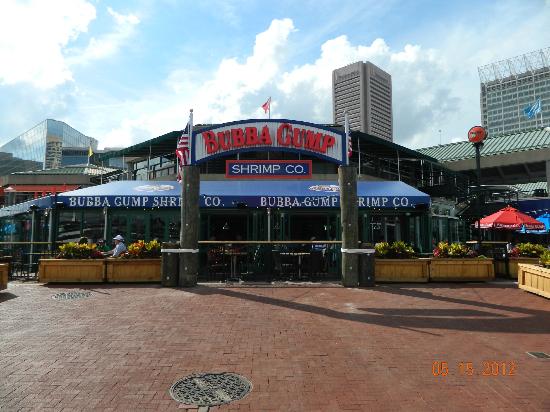
Reported court cases capture a moment. We can look back at reported decisions for detailed and accurate portrayal of historical events, and conditions. The recent reported decision in AAC HP Realty v. Bubba Gump Shrimp Co. Restaurants, Inc. gives a glimpse through the windows of Baltimore City's once-cherished Harbor Place, to see the consequences of decades long neglect by its owners and operators.

The case arose from complaints that Harbor Place tenant Bubba Gump Shrimp Co. Restaurant brought against its landlord that:

"Shortly after it began its operations at Harborplace in 2012, Bubba Gump observed that the landlord was not maintaining the property in good order and repair. At trial, the restaurant presented ample evidence of poor conditions in the common areas, including water leaks, hanging wires, dirty bathrooms, broken concrete, chipping and peeling paint, escalators that did not work, planters containing trash and debris, rusted metal stairs, and rodent infestation."

This photo of Bubba Gump Shrimp Co. is courtesy of TripAdvisor

These conditions lead Bubba Gump to sue the landlord for breach of contract, alleging that its lease required the landlord to maintain common areas. Bubba Gump alleged that rat infestation and dirty common areas evidenced a breach of the contractual promises. Bubba Gump estimated that over 20% of its greater than $1 MM yearly rent was attributable to the common area maintenance that was not being performed by the landlord.

As is typical in cases for breach of contract, Bubba Gump's lawyers added additional alternative claims for  unjust enrichment and other claims for equitable relief. It was the appellate court's discussion of this group of equitable claims which gives us a snapshot of Maryland's current law on commercial disputes.

The case reminds lawyers that equitable remedies, like unjust enrichment, are not available where the parties have a contract in place for the same  subject in dispute, and that contract fully covers the dispute. There are exceptions where a fraud has been committed at the inception of the contract (and not its performance), or the existing contract does not fully cover the subject matter of the dispute. This appellate court saves all Maryland lawyers time in the library by reminding that "[n]o reported decision applying Maryland law has ever upheld a judgment based on any of these exceptions."

For this reason, the trial court's decision granting Bubba Gump an equitable discount on rent owed under the leasing contract was reversed. Bubba Gump was entitled to recover contract damages, but the appellate court instructed that the contract also operated to limit the categories and amounts of damages a commercial tenant may collect.

In the end, broken glass, dirty restrooms and rat infestation at Harbor Place netted Bubba Gump recovery of its out-of-pocket expenses and some attorney fees, but no lost profits or return of rent.


Thursday, December 14, 2017

Contract forum selection clauses are generally enforceable in Maryland lawsuits.

Maryland's United States District Court reinforced long-standing law that a forum selection clause in a commercial agreement will be enforced absent fraud. It further held that broadly drafted language may include disputes that arose during the negotiation and formation of the contract.

On November 7, 2017 Judge Blake decided White Oak v. Alstom, a contract dispute arising from the construction of a power generation facility in Maryland. The plaintiff sued for fraud and various pre-contract actions of the defendant. The contract made by the parties had a forum selection clause-- it stated that all disputes arising from and related to the contract must be litigated in the courts of Virginia.

The plaintiff sued in Maryland's federal court, and the defendant made a motion to transfer based on the contract language.

Judge Blake made a quick and clear analysis of the existing cases to reach her result-- the case would be transferred to Virginia.  The plaintiff was stuck with the broadly worded clause that encompassed not just performance issues during the existence of the contract, but formation issues that pre-dated the existence of the contract. The plaintiff could not wedge the facts of the case into any exception to the general rule.

Forum selection is an important issue that is often ignored when contracts are made by our clients before our involvement. Such language is often buried in the boilerplate of somebody's form agreement, and it is rarely negotiated unless a lawyer is involved. However, its operation can force an aggrieved party to litigate claims in a distant state, with application of unfamiliar procedures and substantive law. The White Oak plaintiff learned that filing in the wrong jurisdiction can also add thousands of dollars in legal fees to a claim.

When negotiating your next agreement with an out-of-state entity, be mindful of forum selection language. A little bit of research will lead you to a much better informed decision before you sign the contract.

Monday, November 6, 2017

Maryland's Construction Trust Fund Statute has obvious limits.

We read almost all the cases published by Maryland's appellate courts, even the non-published ones. The non-published opinions cannot be cited as binding precedent in later cases, but they are important.  A case is sometimes not formally reported because it confirms basic things Maryland lawyers know, or should know.

The November 1, 2017 case entitled C&B v. Dashiell is a good review of some basic construction law. The case began with a very familiar situation:  A sub-contractor was not paid by a general contractor.

The sub-contractor had worked on six different jobs for the general contractor, but had not been fully paid. The sub sued for over $200,000.  As part of the lawsuit, the sub sued the owners of the general contractor, individually.

Maryland's Construction Trust Fund Statute can impose personal liability on the owners of a general contractor where money paid on behalf of a sub-contractor's work is wrongly used. For instance, a GC might use money paid by the owner based on the subs pay application to pay down a bank line of credit, or mounting supplier accounts. The GC might direct the subs money to pay rent, the light bill, or taxes.  The GC might also pay the subs money direct to individual owners to repay loans, or as salary and expense reimbursement. Just about all of this is improper.

But the sub-contractor lost on its claims against the individual owners of the GC  (after taking consent judgments against the GC corporate entity). The case was lost at trial, and lost again on appeal because the sub did not put on essential proof that the trust fund statute applied to this particular situation.

The mere fact that the sub was owed over $200,000 over multiple projects did not automatically qualify the claim under the trust fund statute. The sub had to demonstrate that the work for which the money is owed either 1) arose from a public project covered by Maryland's Little Miller Act; or 2) arose from a private project for which a mechanic's lien could be taken.

Why? Because the Maryland legislature put those limitations in the trust fund statute. In cases involving private construction projects you must put on proof that the work is lienable under the mechanic's lien statute before you may sustain claims under the trust fund statute for personal liability.

The  proof is not difficult-- It requires a demonstration that the total value of the project (and not just the unpaid balance sued upon) meets the percentage of value formula in the mechanic's lien statute:

Every building erected and every building repaired, rebuilt, or improved to the extent of 15 percent of its value is subject to establishment of a lien in accordance with this subtitle for the payment of all debts, without regard to the amount, contracted  for work done for or about the building and for materials furnished for or about the building, including the drilling and installation of wells to supply water, the construction or installation of any swimming pool or fencing, the sodding, seeding or planting in or about the premises of any shrubs, trees, plants, flowers or nursery products, the grading, filling, landscaping, and paving of the premises, the provision of building or landscape architectural services, engineering services, land surveying services, or interior design services that pertain to interior construction and are provided by a certified interior designer, and the leasing of equipment, with or without an operator, for use for or about the building or premises.
 This requires proof. The judge cannot speculate that because the amount sued upon is large that it must fall within the 15% rule. In this case, the $200,000 sum was not sufficient proof that the sub had a lienable claim, and thus it could not demonstrate standing to make claim against the individual owners of the GC under the trust fund statute.

Your construction lawyer should know this.


Thursday, October 5, 2017

New Maryland foreclosure rules for abandoned or vacant properties.

Lenders may now foreclose faster on abandoned or vacant  Maryland residential properties. 

Senate Bill 1033 went into effect on October 1, 2017. It provides a short-cut to the existing foreclosure rules that prevent a lender from initiating foreclosure until 90 days have elapsed from the triggering event.

There must still be a triggering event, such as an extended failure to pay. But if the property is vacant or abandoned the lender may file a petition in the circuit court for permission to immediately foreclose without notice. The court is required to rule on the petition "promptly."

The petition must include admissible evidence to demonstrate that the property is vacant or abandoned. How is that to be done?  The lender must demonstrate any three of the following eleven factors (the capitalized language is lifted from the new law):

(1) GAS, ELECTRIC, SEWER, OR WATER UTILITY SERVICES TO THE PROPERTY HAVE BEEN DISCONNECTED;
(2) WINDOWS OR ENTRANCES TO THE STRUCTURE ON THE PROPERTY ARE BOARDED UP OR CLOSED OFF, OR MULTIPLE WINDOW PANES ARE BROKEN AND UNREPAIRED;
(3) DOORS TO THE STRUCTURE ON THE PROPERTY ARE SMASHED THROUGH, BROKEN OFF, UNHINGED, OR CONTINUOUSLY UNLOCKED;
(4) JUNK, LITTER, TRASH, DEBRIS, OR HAZARDOUS, NOXIOUS, OR UNHEALTHY SUBSTANCES OR MATERIALS HAVE ACCUMULATED ON THE PROPERTY;
(5) FURNISHINGS, WINDOW TREATMENTS, OR PERSONAL ITEMS ARE ABSENT FROM THE STRUCTURE ON THE PROPERTY;
(6) THE PROPERTY IS THE OBJECT OF VANDALISM, LOITERING, OR CRIMINAL CONDUCT, OR THERE HAS BEEN PHYSICAL DESTRUCTION OR DETERIORATION OF THE PROPERTY;
(7) A MORTGAGOR OR GRANTOR HAS MADE A WRITTEN STATEMENT EXPRESSING THE INTENTION OF ALL MORTGAGORS OR GRANTORS TO ABANDON THE PROPERTY;
(8) THERE IS A DETERMINATION THAT NO OWNER OR TENANT APPEARS TO BE RESIDING ON THE PROPERTY AT THE TIME OF AN INSPECTION OF THE PROPERTY BY:
     (I) THE THE SECURED PARTY; OR
     (II) AN APPROPRIATE OFFICIAL OF THE COUNTY OR MUNICIPAL CORPORATION IN WHICH THE PROPERTY IS LOCATED;
 (9) TWO OR MORE CITATIONS HAVE BEEN ISSUED BY A COUNTY OR MUNICIPAL CORPORATION AGAINST THE PROPERTY FOR FAILURE TO MAINTAIN THE PROPERTY AND A HEALTH AND SAFETY ISSUE EXISTS THAT HAS NOT BEEN RECTIFIED;
(10) THE PROPERTY HAS BEEN CONDEMNED BY A COUNTY OR MUNICIPAL CORPORATION; OR
(11) OTHER REASONABLE INDICIA OF ABANDONMENT EXIST.
As you can see, there is a lot to pick from, and each alleged "fact" is an opportunity for dispute at the court's "prompt" hearing. The borrower has an opportunity under the new rule to deny the alleged facts supporting the petition. What is not clear is whether a borrower can be given the opportunity to cure the conditions on which the petition is based (in addition to bringing the loan current), and thus render the petition moot or premature.

But shortening the process for foreclosure on vacants may not be enough to entice lenders to execute on recorded liens. Lenders may continue the practice of electing a breach of contract action against the borrower in order to obtain a money judgment. It is the business practice of some lenders to seek court judgment against the borrower on the underlying promissory note, while leaving the recorded lien intact as a cloud on title. This practice makes it even less likely that a vacant or abandoned property will be recycled to productive use. The new rule does nothing to remove this choice from the lender--- a bank cannot be forced to foreclose, even if the borrower is delinquent, and especially if the property is abandoned or vacant.

Do you need to file or defend such a petition? Fill out our contact form on this page and let's discuss your case.


Sunday, June 11, 2017

Your Maryland contractor cannot delegate his building code responsibilities.

Maryland's Court of Special Appeals has made clear what construction law practitioners have been arguing in the trial courts for a long time -- A general contractor or developer may not delegate its responsibility to comply with building codes to sub-contractors.


On May 31, 2017 the COSA decided Marrick Homes v. Rutkowski, an appeal from a very large money judgment by a trial court in favor of a severely injured homeowner against a general contractor. Mr. Rutkowski fell thirteen feet when a protective railing across a patio door opening failed. He broke bones and sustained a head injury. Expert witnesses explained that the wrong nails were used to secure the protective railing to the house, and that the connections failed when Mr. Rutkowski placed his weight against the railing. The railing did not comply with local building codes.

The work was done by a subcontractor of the defendant at least seven years before, when the house was owned by someone else. Mr. Rutkowski had even been living in the house for several months before he fell.

Thursday, April 27, 2017

Attacking a void judgment in Maryland has no time limits.

Statutes of limitations prevent successful lawsuits that are too old. For example, a lawsuit for money damages filed more than three years after a car accident is too late because the statute of limitations.

But lawsuits don't always demand money damages. Claims can be made for injunctive relief (asking the court to stop something from happening) or for declaratory relief (asking the court to determine a legal obligation). These non-money damage claims are not restricted by statutes of limitations.

The distinction is very important where you are attacking the validity of an old judgment entered against you. It may be that you were not properly served, that your identity was hacked, or that the process of taking a judgment against you was somehow improper or unfair. It may be years before you discover the existence of the judgment on your credit report, or perhaps when you move to a new job.

Thursday, January 26, 2017

Stop everything, I need a continuance!

Senators Bobby Zirkin and Wayne Norman have introduced a bill before the Maryland General Assembly making it easier to obtain a continuance in civil court cases.

Senate Bill 250 proposes that a judge "SHALL CONTINUE A CIVIL PROCEEDING IF ALL PARTIES AGREE TO THE CONTINUANCE."

The current practice gives a judge all the discretion to grant, or not grant a requested continuance. Things happen-- witnesses get sick, settlement discussions break-out as parties assess the true cost of proceeding with a case or hearing, and your lawyer may even get sick or have a family emergency.

I have stood before a judge to request a continuance based on a family emergency, with the consent of the other lawyer, only to be told that "the case can proceed with someone else from your office." This was wrong for several reasons, and could have worked a great hardship on our client had I not chosen to ignore the needs of my family. This bill seems to address such a situation.

But even where it might benefit lawyers, I question the wisdom of chipping away at a judge's discretion to run his or her courtroom. We lawyers are in service of the court, as officers of the court, to promote the smooth administration of justice. Ultimately, the judge is our boss on procedural issues in addition to being the final arbiter of the law in our cases.

As a hedge against unwarranted and last minute agreement to postpone a civil proceeding the bill does grant to the court discretion to assess costs. That means if you pull a case on the day of a jury trial, and the court has already pulled a few dozen folks from their jobs to create your jury pool, you and your client may become responsible for paying members of that pool.

But as I write this, I find my objection to this bill is the potential disruption to the court of last minute private agreements to pull hearings and trials. A court schedules events far in advance to permit parties to prepare, and to subpoena witnesses to testify. Those witnesses take time off work well in advance of the court event. Last minute continuances by private agreement, and without a judge weighing the relative inconvenience imposed on the court and others, will cause significant disruption. For example, a court room may well sit empty and unused because of the last minute hole in the schedule-- there is no time to bring in a replacement case at the last minute.

To save the proposal, I suggest that it set a deadline at least thirty-days prior to a court event for such agreements to postpone. Requests inside thirty-days should remain within the sole discretion of the court. This is consistent with existing practice in some jurisdictions. In Baltimore City, for example, requests made inside thirty-days cannot be made by written motion-- you must show up in person to make the request and often argue with the judge and opposing counsel.

The proposal must also consider court designated "disposition" dates, which determine the latest by which a case must be concluded. Private agreements cannot operate to push case disposition too far into the future or there will be a backlog of unresolved cases.

But a good start. Let's see if Sen. Zirkin and Sen. Norman can fine tune the proposal so that it operates effectively.

Visit our website and see what we've been working on.


Sunday, December 11, 2016

Non-disparagement clauses now illegal in Maryland- mostly.


When an American's expectation of "free speech" overlaps commercial relationships, things get weird. The First Amendment of the U. S. Constitution gives you the absolute right to stand before the White House and shout your grievances across the south lawn toward the Oval Office, but the contract you signed to purchase a thing to be tossed after it breaks can force you to keep negative opinions about the retailer to yourself. Post your negative review on the internet, and you may well face civil penalties and a lawsuit.


The First Amendment restricts your government from silencing your speech, but contracts may have language preventing you from disparaging a company or a product. Can you Imagine getting sued for something you post on Yelp, Facebook or Amazon about something you purchased? It happens, and is mostly legal.


Maryland is just the second State to pass a law to make illegal and unenforceable anti-disparagement clauses in contracts for consumer products. California is the other state, having passed Assembly Bill 2365 in 2014.A federal bill called the Consumer Review Freedom Act passed through the U. S. Senate in 2015, but has not made it through the House of Representatives to the President's desk. It is extremely unlikely that the newly elected administration and legislature will pass the measure into law.
You are a "consumer" when you are the "actual or a prospective purchaser, lessee or recipient of consumer goods or services. "
"Consumer goods" are defined as "goods or services that are primarily for personal, household or family purposes." The introductory language to the bill says that this definition is intended to mirror the definitions found in the Consumer Protection Act, where consumer goods are broadly defined to include credit, debts, obligations, goods and real property.
Any business that seeks your promise to keep silent with a non-disparagement clause now commits a false and deceptive trade practice under the Consumer Protection Act. A violation of the Consumer Protection Act further exposes the business to your claim for damages and attorney fees.
Because the new law does not apply to contracts made before October 1, 2016, you must rely on traditional contract analysis to beat a non-disparagement clause in a contract made before that date.  For example, a consumer's silence may not have been purchased for real or adequate consideration-- they are often buried in long documents, they seem unconnected with the subject of the contract, and there is no extra money paid for the promise. The promise may also reside in what a court would call a "contract of adhesion" where the consumer has so little bargaining power that it is patently unfair to include the restriction. And there are other available contract defenses, depending on your specific situation.

Other types of non-disparagement clauses will remain legal and widely used. The restriction routinely appears in settlement agreements where money is paid in exchange for silence and no admission of liability for specific claims. Where silence is a material object of the agreement, the term will be readily enforced. The clause also routinely appears in documents where business people share proprietary information while negotiating a deal, but the deal is never made. The parties then agree to walk away without disparaging each other or their products.
The Maryland law makes good sense, particularly in this age of on-line reviews and websites that aggregate product and service recommendations and reviews. An informed consumer needs all the information-- both positive and negative-- before making an informed decision. The courts have for years reminded us that the market place is governed by "caveat emptor," the principle that the buyer alone is responsible for checking the quality and suitability of goods before a purchase is made. This new law simply assures that the consumer will have more information. After all, if a business provides for customer reviews on its Facebook, Amazon or Yelp page, then it should be prepared to receive both negative and positive reviews. Anything less presents an incomplete and perhaps dishonest portrayal of the entity's products and services.
The consumer bears some responsibility for making honest and accurate reviews. The false accusations of bad service or poor quality can haunt a business for some time. State laws punishing libel and slander, coupled with rules for the imposition of injunctions,  remain available to the business to curtail the most extreme behavior.
Use your newly enhanced powers wisely!


Maryland H.B 131 became law in 2016 and applies to contracts made after October 1, 2016. It makes illegal and unenforceable contract provisions that bar disparaging public comments and social media postings by a "consumer."