Tuesday, December 9, 2014

Joint account funds can be stolen by a joint owner, and jail time awaits!

The Maryland Court of Special Appeals finally given a clear opinion on whether one joint owner of a bank account can be found guilty of criminal theft from the other joint owner by withdrawing funds from that same account. The answer is "yes," and jail time awaits those who commit the crime.

On October 31, 2014, the appellate court decided Wagner v. State, a case where the daughter of an 84 year old man was sentenced to eight years in prison (with all but 18 months suspended) for drawing over $122,000 out of jointly owned bank accounts. The case speaks to any family where children are added to accounts by elderly parents, and it speaks loudest to those families where children take advantage of their elderly parents by using the money for their own purposes.

Mr. Wagner, 84 years old, simply wanted a family member to help manage his accounts, and to have access to an ATM. Like many older folks, he trusted his kids, and so Mr. Wagner added one of his adult daughters to his bank account (and IRA). Similarly, the daughter added Mr. Wagner to her accounts.

Up to this point, the story is very common, and the actions are well intentioned. We routinely field questions from children who seek to control their parents access to money in joint accounts to 1) preserve an anticipated inheritance, or 2) to keep Dad from lavishing gifts on another woman, or 3) to pay the child's personal expenses.  In the best cases, we can persuade and counsel that the money belongs to the elderly parent, and absent court ordered guardianship, the parent is free to spend the money as he sees fit-- even on fast cars (or scooters?) and a reckless social life.

But Mr. Wagner's daughter drew money out of joint accounts solely for her benefit, and to support a failing business. And for that, she was convicted and sent to prison.

The case is important because it explains how banking rules on joint ownership are to be balanced with real life relationships.  It remains appropriate for an elderly parent to name a relative as an authorized person on the bank account. And it allows the elderly parent to later demonstrate that joint naming of the account does not necessarily imply joint ownership of the funds in that account.

It was Mr. Wagner's testimony that sent his daughter to jail.

Joint naming of bank accounts will always be a useful tool for helping mom and dad manage their money--just remember that it is always their money, and not yours!


Wednesday, November 19, 2014

The War on your Constitution.


The Baltimore Sun reports that prosecutors are choosing to remove evidence from criminal trials rather than permit cops from disclosing how they track cell phones:

City police Det. John L. Haley, a member of a specialized phone tracking unit, said officers did not use the controversial device known as a stingray. But when pressed on how phones are tracked, he cited what he called a "nondisclosure agreement" with the FBI.

"You don't have a nondisclosure agreement with the court," Baltimore Circuit Judge Barry G. Williams replied. Williams threatened to hold Haley in contempt if he did not respond. Prosecutors decided to withdraw the evidence instead.
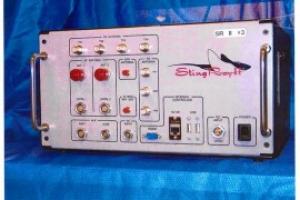
What is a "stingray?"  The ACLU provides this definition:
Stingrays, also known as "cell site simulators" or "IMSI catchers," are invasive cell phone surveillance devices that mimic cell phone towers and send out signals to trick cell phones in the area into transmitting their locations and identifying information. When used to track a suspect's cell phone, they also gather information about the phones of countless bystanders who happen to be nearby.

Traveling?  Take a look this interactive map showing those states where law enforcement is using the stingray, and know that your phone data is very much at risk of interception without your knowledge.

The device is expensive- Baltimore City spent $133,000 to purchase one in 2009- so you better believe it is used. But subterfuge about how they may be undermining the civil rights of non-suspects remains a matter of concern in court. Prosecutors would rather dump evidence than permit officers to respond truthfully to questions:
In court Monday, the robbery detective who prepared the warrant to search Taylor's home testified that members of the department's Advanced Technical Team did a "ride-by" — described in court papers as "sophisticated technical equipment" — to determine one of the phones was inside the home. Detective Alan Savage said he did not know what technology or techniques the unit employs.
The defense then called Haley to the stand. He said police can use data from the cellphone companies to locate phones in real time.
Insley asked Haley whether police can ascertain a phone's location "independently," without the help of a phone company. Haley said yes.
When asked how, he balked.
"I wouldn't be able to get into that," Haley said.
Insley tried again later. Haley responded that police can get GPS location data from phone companies.
"Then there's equipment we would use that I'm not going to discuss that would aid us in that investigation," Haley said.
Williams, the judge, instructed Haley to answer the question. Haley invoked the nondisclosure agreement.
"I can't. I'm sorry. I can't," Haley said.
Williams called Insley's question "appropriate," and threatened to hold Haley in contempt if he did not answer.
Haley demurred again, and Assistant State's Attorney Patrick R. Seidel conferred with other prosecutors in court to observe the hearing.
Finally, Seidel said prosecutors would drop all evidence found during the search of the home — including, authorities have said, a .45-caliber handgun and the cellphone. The prosecutor said the state would continue to pursue the charges.
 Who else uses this secret technology? The ACLU has collected various items that identify the federal agencies for us. They include the FBI, the DEA, the U.S. Secret Service, Immigration and Customs Enforcement, the U.S. Marshals Service, the Bureau of Alcohol Tobacco and Firearms, the U.S. Army, U.S. Navy, U.S. Marine Corps, U.S. National Guard, U.S. Special Operations Command,  and the NSA.

The more robust patriots among us proudly declare that this technology is needed to target terror suspects and other enemy combatants. But use continues to spread, right here at home:
Police and prosecutors in another case ran into a similar problem in September, when they were asked to reveal how a cellphone was tracked.
Sgt. Scott Danielczyk, another member of the Advanced Technical Team, testified in that home invasion case — also before Judge Williams — that police used data from a court order to track a cellphone to the general area of the 1400 block of E. Fayette St.
Danielczyk and three other members of the unit were tasked to "facilitate finding it," he testified, and determined the phone was in the possession of someone on a bus.
Williams asked how Danielczyk concluded the phone was being carried by the suspect.
"Um, we had information that he had the property on him," the officer said.
Williams pressed.
"This kind of goes into Homeland Security issues, your honor," Danielczyk said.
"If it goes into Homeland Security issues, then the phone doesn't come in," Williams said. "I mean, this is simple. You can't just stop someone and not give me a reason."
In that case, too, the phone evidence is no longer in play. Prosecutors are proceeding without it.
This is real life, and not Season 6 of The Wire. The use of phone wire tap technology in the HBO series was characterized by creator David Simon as  metaphor. Like police digging into the secret world of Baltimore's fictional drug culture, the viewer was invited to share in that secret view. In fact the show often presented images as if the viewer were looking through cameras or listening in on phone calls.


But what is unfolding in our City courts is not metaphor. The police  and prosecutors sworn to protect and uphold the Constitution of the United States are gathering information on you and me without obtaining Constitutionally mandated permission. And to hide this fact from public scrutiny, they choose to cripple their own prosecutions by withdrawing evidence.

Be afraid, be very afraid.

Postscript 12/11/2014- Our friend Tom Donnelly argued successfully before the Maryland Court of Appeals that expert testimony is required in connection with identifying cell phone tower locations and transmissions in criminal cases. Well done, Tom!